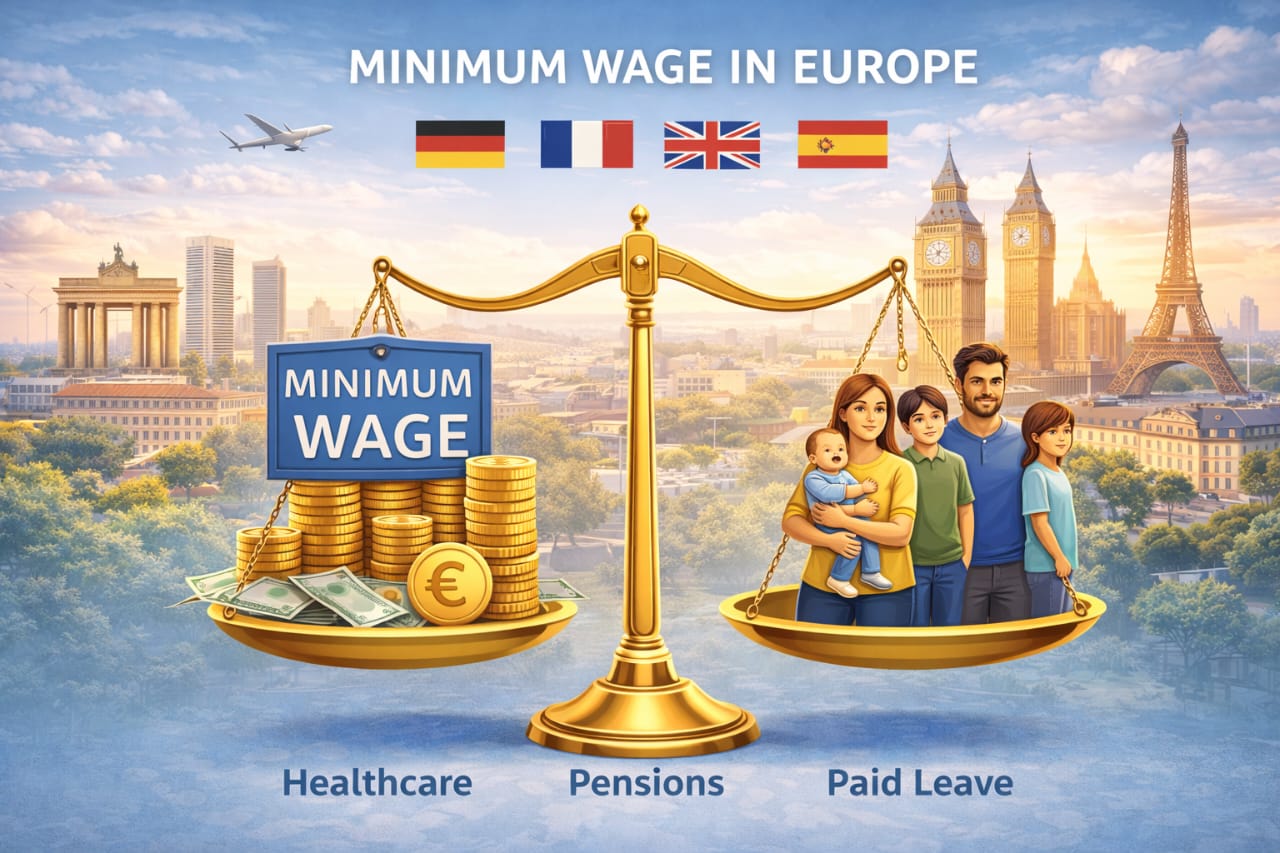

Direct Answer: Minimum Wage in Europe refers to legally established wage floors set by national governments or collective bargaining agreements. These wage levels vary widely across countries and must be evaluated alongside taxation, working hours, and cost-of-living conditions to understand real purchasing power and financial sustainability.
Minimum Wage in Europe plays a central role in labor market policy across the continent. While high-paying professions often dominate discussions about income potential, wage floors define the baseline income structure for millions of workers in retail, hospitality, manufacturing, and entry-level roles.
Minimum wage systems reflect broader economic models, balancing income protection with employment competitiveness. They are not uniform across Europe, and their real value depends heavily on taxation, working hours, and living costs.
For a full income framework, see Salaries, Cost of Living & Work-Life Balance in Europe. To evaluate purchasing power, review Cost of Living vs Salary in Europe. Professional income comparisons are covered in High-Paying Careers in Europe. Tax implications are outlined in European Tax Systems Explained, and regulated work schedules are detailed in Working Hours in Europe.
How Minimum Wage Is Set in Europe
European countries use two primary approaches:
- Statutory minimum wage: Set directly by government legislation.
- Collective bargaining agreements: Negotiated between employer associations and trade unions.
Most EU member states apply statutory wage floors. However, countries such as Denmark and Sweden rely heavily on collective agreements rather than national minimum wage laws.
In these systems, wage protection is sector-based rather than nationally standardized.
Why Minimum Wage Levels Differ Across Countries
Minimum wage differences reflect:
- National productivity levels
- Cost-of-living variations
- Economic development stage
- Labor market competitiveness
- Inflation adjustment mechanisms
Higher-income countries often maintain higher statutory minimum wages. However, real purchasing power must be analyzed alongside housing costs, transportation, food prices, and taxation systems.
Gross vs Net Minimum Wage
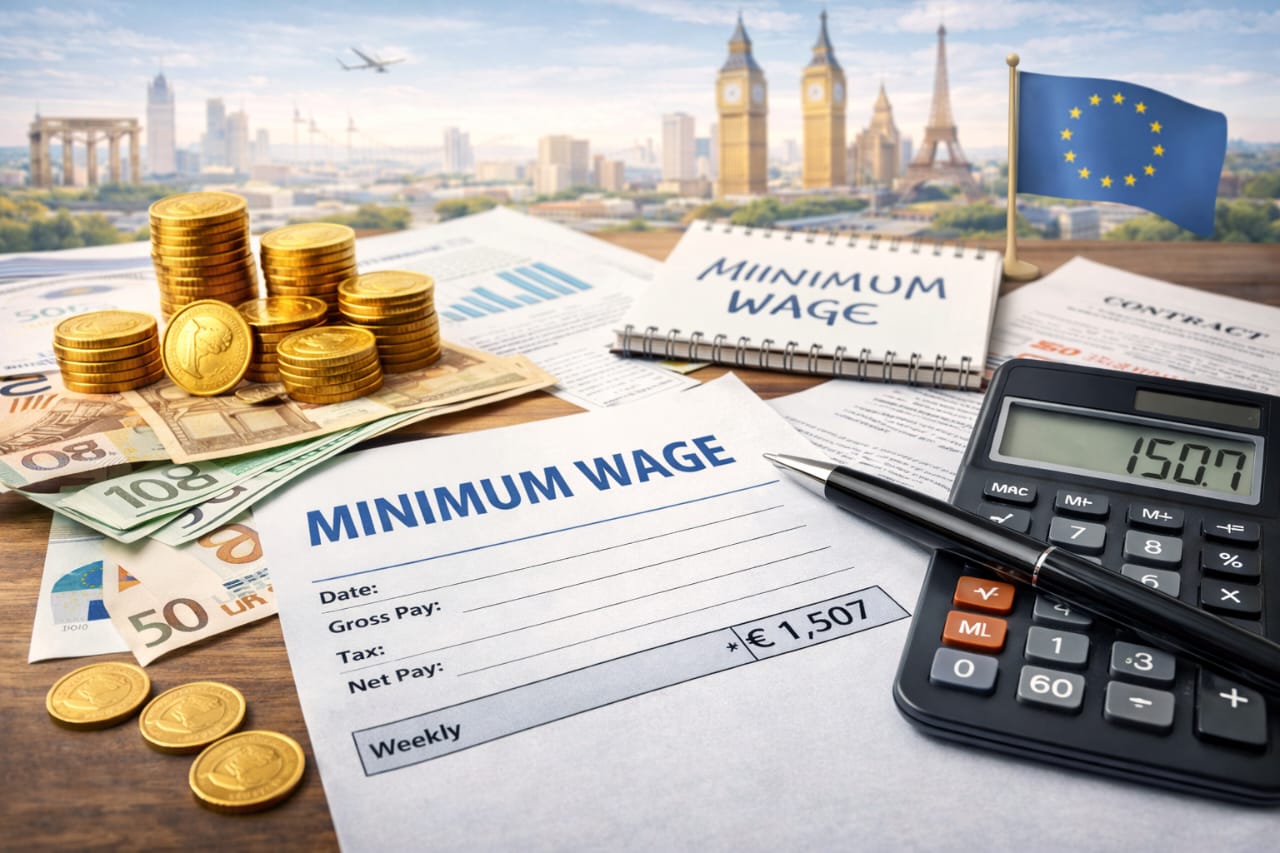
Minimum wage is typically quoted as gross monthly income before taxation and social contributions. However, workers receive net pay after deductions.
Deductions may include:
- Income tax
- Pension contributions
- Health insurance payments
- Unemployment insurance
The net value of minimum wage differs substantially depending on national tax thresholds and social contribution rates.
Minimum Wage and Working Hours
Minimum wage should always be evaluated in combination with standard working hours. A higher hourly wage may not translate into higher monthly income if working hours differ significantly.
European labor law generally caps the workweek at an average of 48 hours under EU directives, though most full-time contracts range between 35 and 40 hours. Details are discussed in Working Hours in Europe.
Hourly minimum wage multiplied by contractual hours determines realistic monthly income.
Which Countries Have Higher Minimum Wages?
Western and Northern European countries generally report higher statutory wage floors. These include:
- Luxembourg
- Germany
- Netherlands
- Belgium
- Ireland
Southern and Eastern European countries tend to operate lower statutory wage levels, though living costs may also be lower.
Direct comparisons without purchasing power analysis can be misleading.
Purchasing Power and Real Value
The true value of Minimum Wage in Europe depends on purchasing power. High housing costs in major cities can significantly reduce disposable income despite higher nominal wages.
Professionals evaluating wage floors should consider:
- Average rent prices
- Food and transportation expenses
- Utility costs
- Childcare availability
Some mid-income European countries offer stronger wage-to-cost ratios than high-income capitals.
Minimum Wage and Social Protection
Minimum wage earners in Europe typically receive full access to statutory benefits, including:
- Public healthcare
- Pension accrual
- Paid leave rights
- Unemployment insurance coverage
These benefits form part of total compensation, even if cash take-home pay appears modest.
How Inflation Affects Wage Floors
Many countries review minimum wage annually to reflect inflation and economic growth. Adjustment mechanisms may involve:
- Automatic indexation
- Independent wage commissions
- Tripartite negotiations between government, employers, and unions
Indexation policies aim to preserve real purchasing power over time.
Sector Differences
In collective bargaining systems, minimum wages may vary by industry. Construction, hospitality, and transport sectors often maintain distinct negotiated wage levels.
This structure allows wage flexibility based on productivity differences.
Is Minimum Wage Enough to Live On?
Livability depends heavily on location and household composition. Minimum wage may provide sustainable living standards in smaller cities or lower-cost regions.
However, in high-cost capitals, wage floors may require supplementary income sources or shared housing arrangements to remain financially viable.
Long-Term Career Implications
Minimum wage positions often serve as entry points into labor markets. Career advancement through skill development, vocational training, and specialization significantly improves earning potential over time.
European labor frameworks generally support professional mobility through training incentives and educational pathways.
Final Evaluation
Minimum Wage in Europe establishes the foundational income level within national labor systems. While statutory wage floors vary widely across the continent, real financial sustainability depends on taxation structures, working hours, social protections, and regional cost-of-living pressures.
Professionals assessing employment opportunities should evaluate wage floors within the full compensation ecosystem rather than focusing on headline hourly rates alone.