


Direct Answer: European Tax Systems Explained means understanding how progressive income tax, social contributions, and mandatory deductions affect your real take-home pay. While tax rates differ across countries, net income depends on bracket structure, social security payments, and cost-of-living balance rather than headline salary alone.
European Tax Systems Explained is one of the most important topics for professionals evaluating income across Europe. Gross salary figures rarely tell the full story. What matters is how much remains after income tax, pension contributions, healthcare payments, and statutory deductions.
For broader salary context, see our guide on Salaries, Cost of Living & Work-Life Balance in Europe. For purchasing power comparison, read Cost of Living vs Salary in Europe. If you’re assessing sector income potential, explore High-Paying Careers in Europe.
How Do European Income Tax Systems Work?
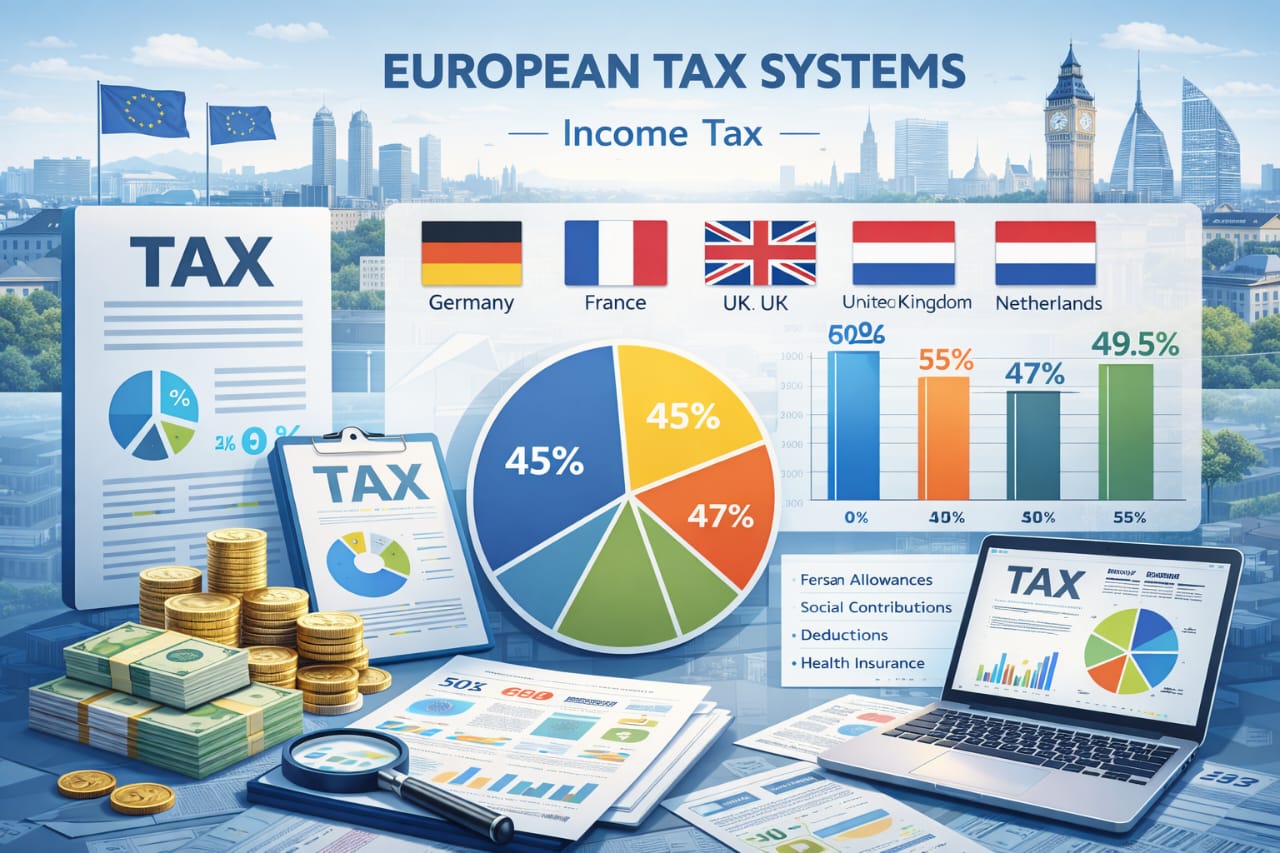
Most European countries operate progressive income tax systems. This means higher portions of income are taxed at higher marginal rates. However, marginal tax rate does not equal effective tax rate.
Key structural elements include:
- Progressive tax brackets
- Social security contributions
- Pension deductions
- Health insurance funding
- Unemployment insurance contributions
- Local or municipal taxes (in some countries)
Understanding these components is essential for calculating real disposable income.
Gross Salary vs Net Salary: What Professionals Actually Take Home
When reviewing a contract, professionals should focus on net salary rather than gross figures. Two employees earning the same gross income in different countries may retain very different take-home amounts.
Net income depends on:
- Personal tax bracket
- Marital or family status
- Social contribution percentage
- Regional taxation rules
- Available deductions and allowances
Countries such as Germany and France apply structured social contribution systems that fund healthcare and pensions directly from payroll. Other countries may structure contributions differently but still maintain public financing models.
Social Contributions: Why Taxes Fund More Than Government Revenue
European taxation systems are designed to support comprehensive public services. Social contributions often finance:
- Universal healthcare systems
- Public pension schemes
- Parental leave programs
- Unemployment protection
- Disability insurance
While these deductions reduce immediate take-home pay, they reduce private financial risk and out-of-pocket service costs.
How Different Countries Structure Taxation
Although all European countries operate progressive systems, structural differences exist.
- Germany: Federal progressive income tax combined with mandatory social insurance contributions.
- France: Progressive income tax plus employer-heavy social security contributions.
- Netherlands: Box-based tax system separating employment income and investment income.
- Sweden: Municipal income tax plus national progressive tax layers.
- Switzerland: Federal, cantonal, and municipal taxation combined.
Tax burdens differ not just by country but by region within countries.
Effective Tax Rate vs Marginal Tax Rate
Marginal tax rate refers to the percentage applied to the highest portion of income. Effective tax rate reflects total tax paid divided by total income.
Professionals often overestimate their tax burden by focusing solely on marginal rates. Effective tax rate gives a clearer picture of real deductions.
Employer Contributions and Hidden Compensation Value
Employers across Europe often pay significant social contributions on behalf of employees. These payments may not appear in salary discussions but represent additional employment cost borne by the employer.
This structure supports pension accrual, healthcare eligibility, and insurance protections without direct employee billing.
High Earners and Progressive Systems
Higher income brackets face higher marginal rates under progressive systems. However, tax relief mechanisms such as pension deductions, professional expense allowances, and investment frameworks may reduce overall liability.
High earners should evaluate total compensation including:
- Bonus structures
- Stock options
- Deferred compensation
- Company pension contributions
Taxation and Work-Life Balance
European tax structures support labor protections such as statutory paid leave, regulated working hours, and parental benefits.
In some cases, slightly lower net salaries are balanced by reduced healthcare costs and social security stability.
Which Countries Offer the Most Competitive Net Income?
Countries such as Switzerland and Luxembourg often rank high in net income comparisons, though housing costs remain elevated. Northern European countries maintain structured high-tax models but provide extensive public service coverage.
Southern and Eastern European countries typically apply lower tax rates but also offer lower average salaries. True financial benefit depends on proportional balance rather than headline figures.
Tax Residency and Cross-Border Workers
Tax residency status determines liability in most European countries. Residency rules typically depend on duration of stay, center of economic interest, and permanent residence status.
Cross-border workers may face additional reporting requirements and tax coordination agreements between states.
Final Evaluation
European Tax Systems Explained requires analyzing progressive brackets, social contributions, and effective tax rates rather than relying on headline percentages. Net income after deductions determines true earning power.
Professionals should assess salary offers within the broader context of taxation, public benefits, and cost-of-living balance to evaluate long-term financial sustainability.