
How to get a job in Europe as an international student is one of the most important questions students face when planning their future. Studying abroad is not just about earning a degree—it is about building a pathway into the European job market and creating long-term career opportunities.

Understanding how to get a job in Europe as an international student involves more than applying for roles—it requires aligning your education, skills, and experience with market demand.
Quick Answer: To get a job in Europe as an international student, you need to choose a high-demand course, gain practical experience during your studies, use structured job search platforms, and transition through post-study work opportunities available in many European countries.
How to Get a Job in Europe as an International Student
Getting a job in Europe as an international student requires building relevant skills, gaining experience during studies, and using structured job search strategies aligned with the European labor market.
For many students, the biggest mistake is assuming that getting a degree automatically leads to a job. In reality, the European job market is structured, competitive, and heavily influenced by skills, experience, and strategic positioning.
According to the European Commission, many European countries offer post-study pathways that allow international graduates to stay and work after completing their education. However, accessing these opportunities depends on how well you prepare during your studies.
Understanding How the European Job System Works
The transition from student to employee in Europe follows a clear structure. It is not random, and it is not based on luck. Instead, it is a system that rewards preparation, relevance, and timing.
First, you study in a country that offers strong employment opportunities. Second, you gain experience through internships, part-time roles, or industry projects. Third, you use post-study work options to remain in the country while searching for a full-time job.
This structured pathway is why many students compare outcomes across countries before making decisions, often using insights from best countries to work in Europe for foreign professionals to understand where opportunities are strongest.
Understanding this system early changes everything. Instead of reacting after graduation, you begin preparing from your first year.
Why Most International Students Struggle to Get Jobs
Many international students struggle not because opportunities are unavailable,…especially when they do not follow structured strategies outlined in this guide on highest paying countries in Europe before choosing where to build their careers.
High-Demand Fields That Increase Your Chances
Your course of study directly influences your job opportunities. Some fields naturally align with labor market demand, making it easier for graduates to secure employment.
Technology-related fields such as software development, data science, and cybersecurity are among the most in-demand across Europe. These roles are not limited to one country—they are needed everywhere.
Engineering also remains a strong field, particularly in countries with industrial and manufacturing strength. Civil, mechanical, and renewable energy engineering are especially valuable.
Healthcare is another critical sector, driven by aging populations and increasing demand for services. This makes it one of the most stable career paths available.
Business and finance roles continue to offer opportunities, particularly for students who combine traditional business knowledge with analytical or digital skills.
Students who align their studies with these fields are not just choosing a degree—they are positioning themselves for long-term success in the European job market.
Building Experience Before Graduation
One of the most important factors in getting a job in Europe is experience. Employers want candidates who can contribute immediately, not those who require extensive training.
This is why internships, part-time jobs, and industry projects are essential. They provide real-world exposure and help you understand how companies operate.
Many universities in Europe integrate practical experience into their programs, but students must actively take advantage of these opportunities.
Working during your studies also helps you build professional networks, which play a significant role in job opportunities. In many cases, connections lead to interviews and job offers.
This is where understanding the broader employment landscape becomes important, especially when comparing cost of living vs salary in Europe to ensure your chosen path is financially sustainable.
The Reality of Language and Employability
Language plays a major role in employability, but it is often misunderstood. While many international roles are available in English, especially in countries like the Netherlands and Ireland, learning the local language significantly increases your opportunities.
In countries like Germany and France, many roles still require at least basic proficiency in the local language, even in international environments.
This does not mean you cannot find English-speaking jobs—it means your options expand significantly when you add language skills to your profile.
Students who understand this early often invest time in learning the local language, giving themselves a clear advantage in the job market.
The Bigger Picture: Strategy Over Luck
Getting a job in Europe as an international student is not about luck—it is about strategy. Every decision you make, from your course selection to your internships and networking efforts, contributes to your final outcome.
Students who succeed are those who think long-term. They do not wait until graduation to act. Instead, they build their profile step by step, aligning their education with real-world opportunities.
By understanding how the system works and preparing early, you position yourself not just to find a job, but to build a sustainable and successful career in Europe.
Step-by-Step Strategy to Get a Job in Europe as an International Student
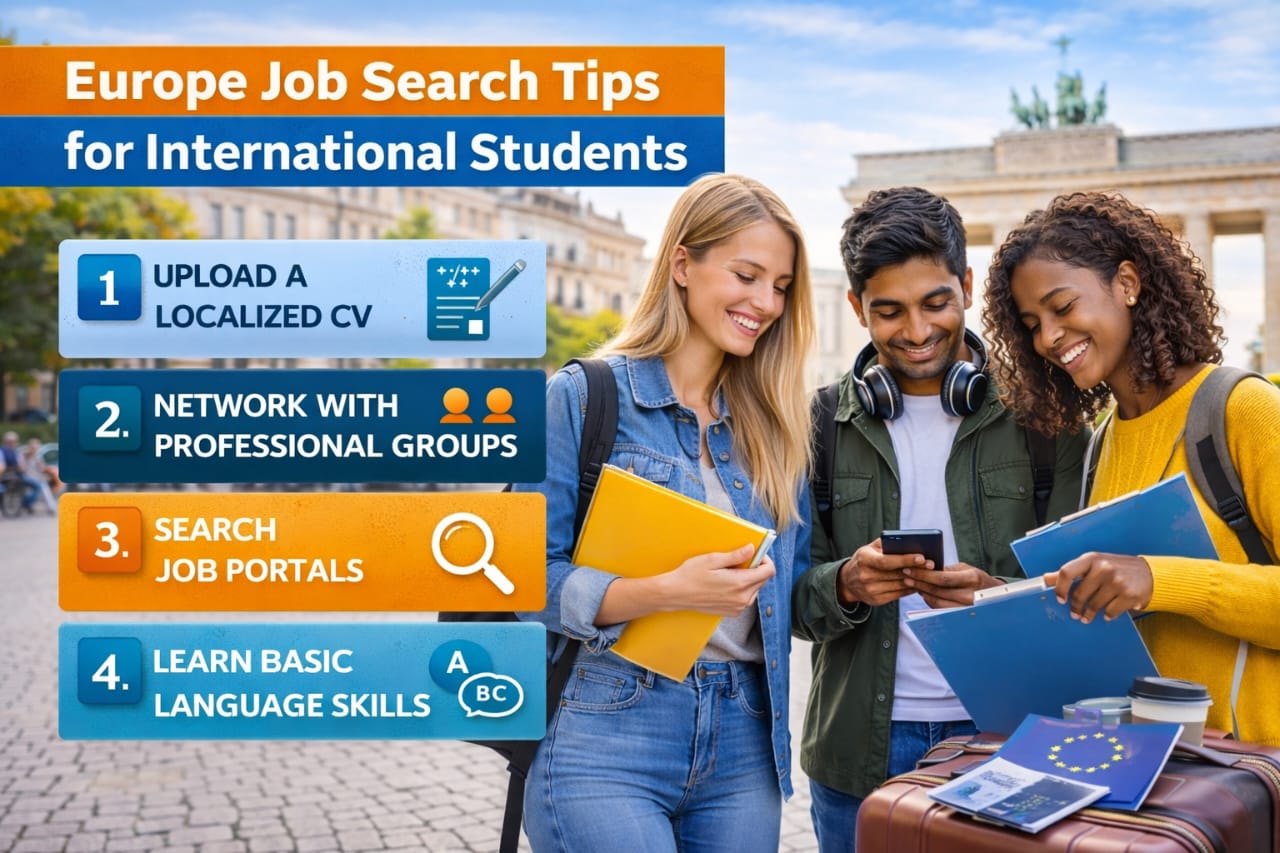
Understanding how to get a job in Europe as an international student becomes much easier when you follow a structured, step-by-step approach. This is not about applying randomly—it is about positioning yourself correctly within the European job system.
Step 1: Start Early and Build a Job-Focused Profile
The job search process in Europe begins long before graduation. Students who succeed typically start preparing within their first year by building a profile that aligns with employer expectations.
This includes gaining relevant skills, participating in internships, and choosing projects that reflect real industry needs. Employers are not just hiring degrees—they are hiring capability.
Many students who secure jobs early are those who already understand the employment landscape, often guided by insights from high paying careers in Europe to identify where opportunities are growing.
Step 2: Use the Right Job Platforms in Europe
Applying through the correct platforms significantly improves your chances. Europe has structured job portals designed to connect candidates with employers across different countries.
Some of the most effective platforms include:
- EURES (European Job Mobility Portal): A centralized platform offering thousands of job listings across Europe.
- LinkedIn: Widely used for professional networking and job applications.
- Company Career Pages: Many employers prefer direct applications through their official websites.
Using these platforms strategically ensures that your applications are visible to the right employers rather than getting lost in generic job boards.
Step 3: Optimize Your CV for European Standards
Your CV is one of the most important tools in your job search. European employers often expect structured, clear, and concise formats.
Using formats like Europass can help ensure your CV meets standard expectations. However, beyond formatting, the content matters more.
Focus on:
- Relevant skills and achievements
- Internships and practical experience
- Clear alignment with the job role
Many students underestimate this step, but a well-structured CV significantly increases interview chances.
Step 4: Understand Post-Study Work Opportunities
One of the biggest advantages of studying in Europe is access to post-study work options. These pathways allow graduates to remain in the country while searching for jobs.
Different countries offer varying durations and conditions, but the core idea remains the same: you are given time to transition from student to employee.
This transition is critical because it removes immediate pressure and allows you to focus on securing the right role rather than accepting any available job.
Students who plan for this stage early often make better decisions about where to study and work, especially when comparing long-term outcomes like salary needed to live comfortably in Europe.
Step 5: Apply Strategically, Not Randomly
Sending hundreds of generic applications is one of the biggest mistakes students make. European employers value targeted, well-prepared applications.
This means customizing your CV and cover letter for each role, highlighting how your skills match the job requirements.
Quality always beats quantity in the European job market.
Where the Real Opportunities Are
Understanding where to focus your job search can make a significant difference. Some cities and regions offer stronger opportunities due to industry concentration and economic activity.
Cities like Berlin, Amsterdam, Dublin, and Paris are known for their strong job markets, particularly in technology, finance, and international business.
These locations attract global companies, creating more opportunities for international graduates.
At the same time, understanding broader economic factors—such as salary levels and employment conditions—helps you make informed decisions, especially when comparing options using insights from average salary in Europe by country.
The Role of Networking in Getting a Job
Networking is one of the most underrated aspects of job searching in Europe. Many opportunities are not publicly advertised and are filled through professional connections.
This is why attending events, connecting with professionals on LinkedIn, and engaging with university career services can significantly improve your chances.
Building relationships within your industry often leads to referrals, which carry more weight than standard applications.
Common Mistakes to Avoid
Even with the right strategy, certain mistakes can reduce your chances of success.
- Waiting until graduation to start: This limits your opportunities and increases competition.
- Ignoring language skills: Even basic knowledge can make a big difference.
- Applying without direction: Random applications rarely lead to results.
- Overlooking internships: These often lead to full-time roles.
Avoiding these mistakes can significantly improve your chances of securing a job after graduation.
Long-Term Strategy: From Job to Residency
Getting a job is only the first step. For many international students, the ultimate goal is long-term stability, which may include residency or permanent settlement.
Europe offers structured pathways that allow skilled workers to transition from employment to long-term residency, particularly in countries with strong labor demand.
This makes your first job especially important—it sets the foundation for your future in Europe.
Frequently Asked Questions
Can international students work in Europe after graduation?
Yes, many European countries offer post-study work options that allow international students to stay and search for jobs after completing their studies.
Do I need to speak the local language to get a job?
Not always, but learning the local language increases your opportunities significantly, especially in non-English-speaking countries.
Which countries are best for jobs in Europe?
Germany, the Netherlands, Ireland, and France are among the top countries offering strong job opportunities for international graduates.
Is it easy to get a job in Europe as a student?
It depends on your preparation, skills, and strategy. Students who gain experience and apply strategically have a much higher success rate.
Conclusion: how to get a job in Europe as an international student
Getting a job in Europe as an international student requires a structured approach that combines education, experience, and strategic job searching.
Students who prepare early, build relevant skills, and understand how the European job market works have a much higher chance of success.
In simple terms, success is not based on luck—it is built through planning, consistency, and making the right decisions at each stage.