
Opening a bank account in Europe as a foreigner is not just a simple process of filling a form—it is a structured financial verification system designed to confirm your identity, your source of income, and your overall risk profile within the European banking system.
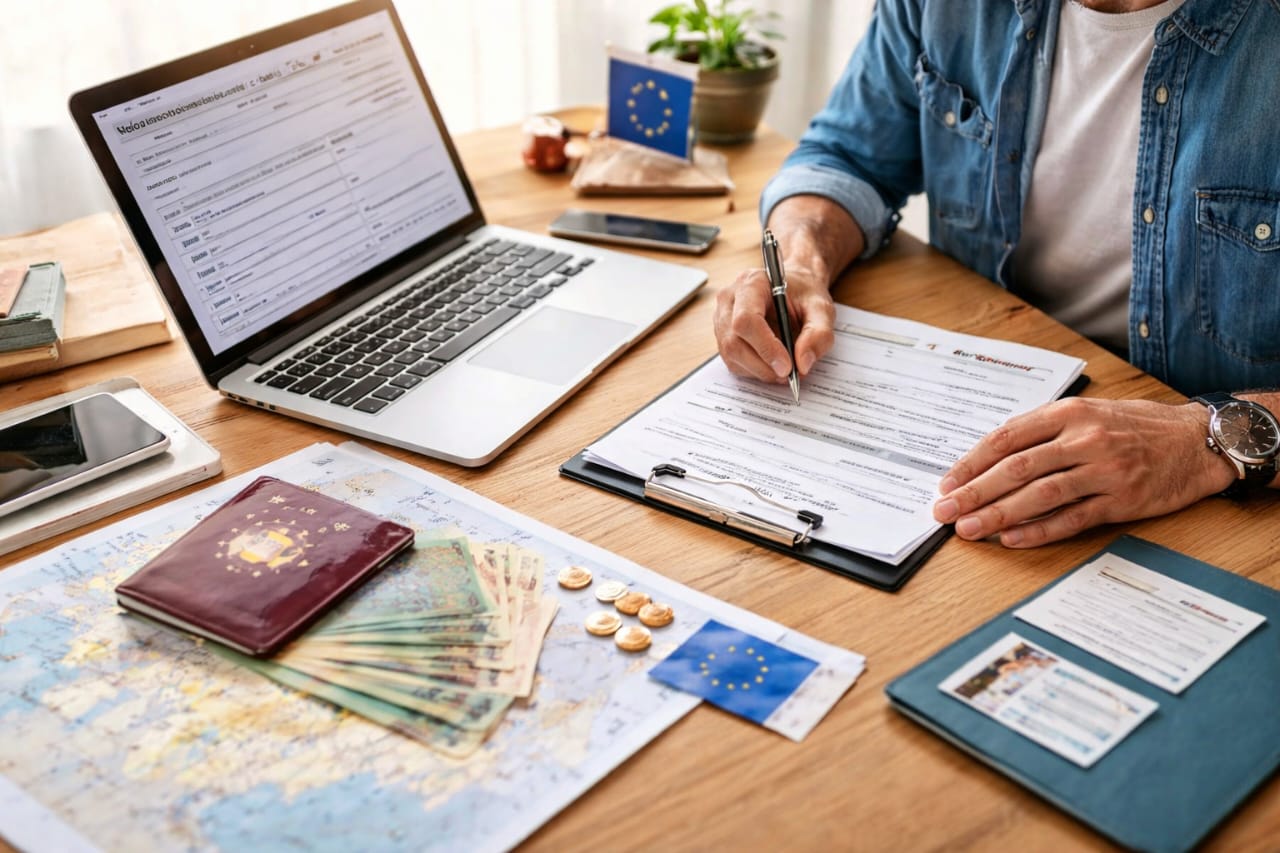
Opening a bank account in Europe as a foreigner involves more than submitting documents—it requires presenting a clear financial profile that meets strict banking regulations.
Many foreigners assume that once they arrive in Europe, opening a bank account will be quick and automatic. In reality, banks follow strict regulatory requirements, and approval depends on how clear, consistent, and verifiable your documentation is.
Quick Answer: Opening a bank account in Europe as a foreigner requires a valid passport, proof of address, proof of income or source of funds, and successful identity verification under EU KYC and AML rules. Approval depends on how well your documents meet these requirements.
Opening a Bank Account in Europe as a Foreigner
Opening a bank account in Europe as a foreigner requires meeting identity verification, financial transparency, and compliance checks under European banking regulations.
According to the EU rules on bank account access, individuals—including foreigners—can open bank accounts if they meet identity and compliance requirements set by financial institutions.
This means the process is not about luck. It is about meeting a structured system designed to reduce financial risk.
Once you understand this system, the process becomes predictable rather than confusing.
How the European Banking System Evaluates Foreigners
Every bank in Europe operates under strict financial regulations that require them to assess applicants before granting access to banking services.
This assessment is not random. It is based on three core layers that determine approval or rejection.
The first is identity verification. The bank must confirm that you are exactly who you claim to be. This involves checking your passport, verifying biometric data, and cross-referencing databases.
The second is financial transparency. Banks must understand where your money comes from. This is part of anti-money laundering regulations, which require clear proof of income or financial activity.
The third is risk assessment. This includes your country of origin, your residency status, and your expected financial behavior.
If all three layers are clear and consistent, approval becomes straightforward. If any part is unclear, your application is delayed or rejected.
Documents Required and What They Actually Mean
Most guides simply list documents, but understanding what they represent is what makes the difference.
Your passport is not just identification—it is the foundation of your financial identity. It must be valid, clear, and consistent with all other documents you provide.
Proof of address is not just about location—it proves that you can be traced within the system. Banks need to know where you are based, even if your stay is temporary.
Proof of income or source of funds is one of the most important factors, especially when aligned with strategies explained in this guide on how to get a job in Germany as a foreigner.
For example, having a job in Europe significantly strengthens your application. This is why understanding how to find English-speaking jobs in Europe can directly improve your chances of opening a bank account.
Additionally, your financial expectations must align with reality. Knowing benchmarks like average salary levels across Europe helps ensure your income profile appears realistic and consistent.
Why Many Foreigners Get Rejected
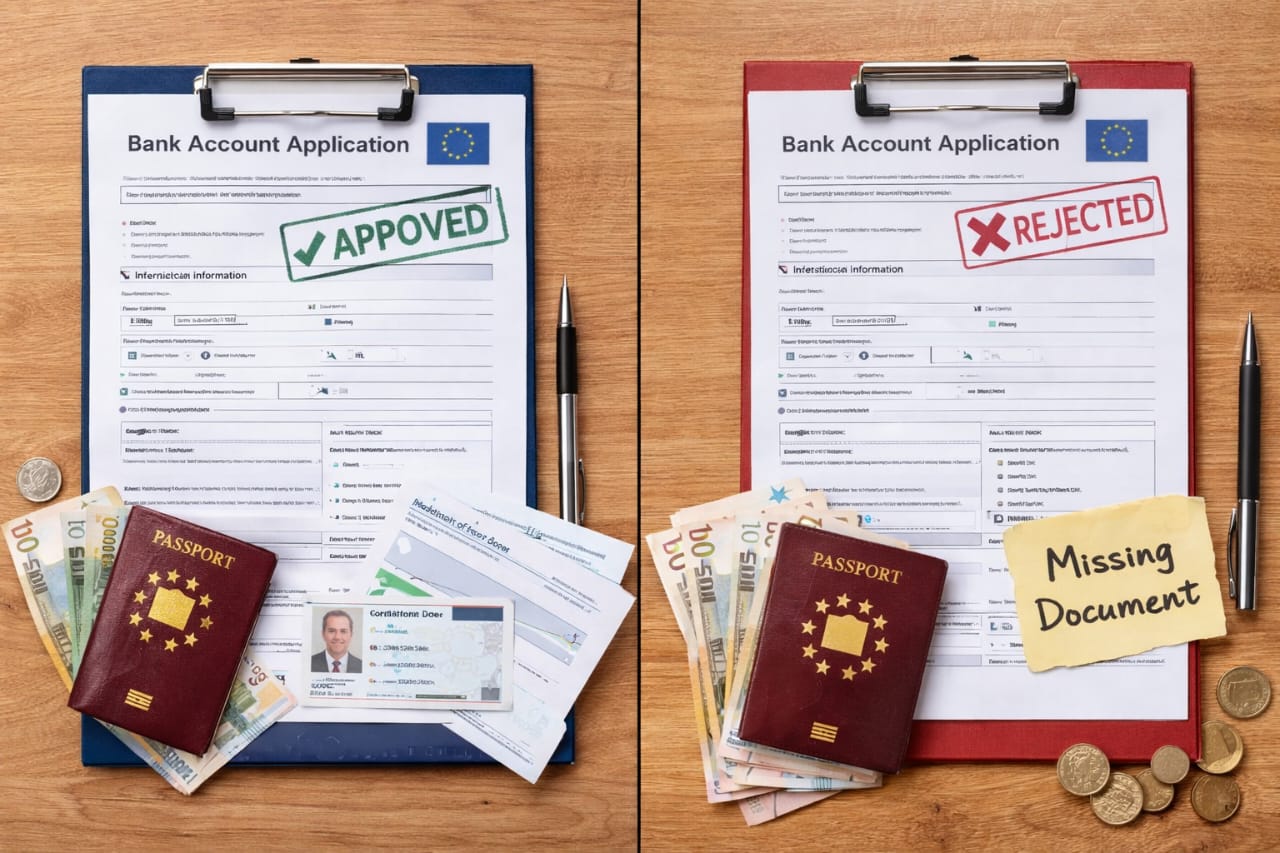
Most rejections do not happen because documents are missing. They happen because documents are unclear, inconsistent, or do not align with each other.
Common reasons include:
- Using an address that cannot be verified
- Providing unclear or unverifiable income sources
- Mismatch between documents
- Failing identity verification checks
European banks are designed to avoid risk. If your profile raises questions, the safest decision for them is rejection.
This is why preparation is not about collecting documents—it is about making your entire application clear, consistent, and trustworthy.
Why Understanding the System Gives You an Advantage
Once you understand how banks evaluate applications, everything changes.
You stop guessing and start preparing strategically.
You know which documents matter most, how to present them, and how to avoid common mistakes.
Opening a bank account in Europe as a foreigner is not difficult—it is structured. And once you follow that structure correctly, your chances of approval increase significantly.
The Difference Between Approval and Instant Rejection
At this stage, most people believe they have done everything correctly. They have their passport, their address, and their documents ready. Yet many applications still get rejected.
The difference comes down to one thing: how your profile is interpreted by the bank’s internal risk system.
Banks do not simply check documents individually—they analyze how all your documents connect together.
This means your application is judged as a complete financial story, not as separate files.
For example, if your employment contract shows a salary that does not align with your job role, the system may flag this as inconsistent. If your address appears temporary or unverifiable, your profile becomes unstable. If your source of funds is unclear, your risk level increases.
This is why two people with the same documents can have completely different outcomes.
One presents a clear, structured profile. The other presents uncertainty.
What Makes a “Strong” Application in European Banking
A strong application is not about having more documents—it is about having aligned documents.
Banks look for clarity, consistency, and predictability.
A strong profile typically includes:
- A stable and verifiable address
- A clear and legitimate source of income
- Consistent personal information across all documents
- A logical reason for opening the account
When these elements align, your application appears low-risk, which significantly increases approval chances.
This is why having structured employment in Europe plays a key role. Your job provides financial traceability, which banks prefer over irregular or unclear income sources.
Why Your Source of Funds Matters More Than You Think
One of the most sensitive parts of your application is your source of funds.
European banks are required to understand not just how much money you have, but how you obtained it.
This is part of strict financial regulations designed to prevent illegal activity.
If you plan to deposit money into your account, especially larger amounts, you must be able to explain it clearly.
This could include:
- Salary from employment
- Savings accumulated over time
- Business income
- Freelance earnings
If your explanation is unclear or unsupported by documents, your account may be restricted or even closed after opening.
This is why transparency is not optional—it is required.
How Banks Monitor Your Account Even After Approval
Many people think that once their account is approved, the process is over. This is not true.
European banks continue to monitor accounts after they are opened.
This includes:
- Tracking transaction patterns
- Monitoring unusual activity
- Checking consistency with declared income
If your activity does not match your original profile, the bank may request additional information or restrict your account.
This is why it is important to maintain consistency even after approval.
Why Non-Residents Face More Challenges
Opening a bank account as a non-resident is possible, but it comes with additional challenges.
Banks often consider non-residents as higher risk because:
- They have weaker local ties
- Their address may be temporary
- Their financial activity may be harder to track
This does not mean you will be rejected—it means your application must be stronger.
You must provide clearer documentation and be prepared for additional verification steps.
Strategic Advantage: Preparing Before You Apply
The biggest advantage you can have is preparation.
Instead of applying immediately after arriving, strong applicants prepare their documents in advance.
This includes:
- Securing a stable address
- Having a clear employment contract
- Organizing proof of funds
- Ensuring all documents match perfectly
This approach reduces delays and increases approval speed.
It also positions you as a low-risk applicant in the eyes of the bank.
The Key Insight Most Foreigners Miss
The biggest mistake foreigners make is thinking this process is administrative.
It is not.
It is a financial verification system.
Once you understand that, everything changes.
You stop focusing on “what documents are required” and start focusing on “what the bank needs to trust you.”
That shift alone is what separates successful applications from repeated rejection.
Step-by-Step Process to Open a Bank Account in Europe as a Foreigner
Once your documents are prepared and aligned, the actual process of opening a bank account becomes much easier to navigate. While procedures vary slightly between countries and banks, the overall structure remains consistent across Europe.
The key is to approach each step with clarity and preparation rather than rushing through the process.
Step 1: Choose the Right Type of Bank
Your first decision is whether to use a digital bank or a traditional bank.
Digital banks are faster and more flexible for foreigners, especially if you do not yet have full residency. Traditional banks, however, offer more stability and access to a wider range of financial services.
Your choice should depend on your current situation, long-term plans, and level of documentation.
Step 2: Gather and Align Your Documents
Before applying, ensure that all your documents are consistent and up to date. This includes your passport, proof of address, and proof of income.
Consistency is critical. If your documents do not match perfectly, your application may be delayed or rejected.
Step 3: Submit Your Application
Depending on the bank, this can be done online or in person.
Digital banks typically allow you to complete the entire process through a mobile app, while traditional banks may require an in-branch visit.
During this stage, you will provide personal information, upload documents, and answer questions about your financial activity.
Step 4: Complete Identity Verification
This is the most important stage of the process.
You may be required to:
- Record a video verification
- Take a live selfie
- Attend an in-person appointment
If this step fails, your application will not move forward.
Step 5: Approval and Account Activation
Once verified, your account is approved and activated.
You will receive your account details, and in many cases, a debit card will be issued.
At this point, your account is ready to use—but it is still subject to monitoring.
Digital vs Traditional Banks: Full Comparison
| Feature | Digital Banks | Traditional Banks |
|---|---|---|
| Account Opening Speed | 24–48 hours | Several days to weeks |
| Verification Method | Online (video/selfie) | In-person required |
| Accessibility for Foreigners | High | Moderate to low |
| Service Range | Basic to moderate | Full banking services |
| Residency Requirement | Flexible | Often strict |
This comparison shows why many foreigners begin with digital banks and later transition to traditional banks once they are fully settled.
Advanced Strategy to Increase Approval Chances
If you want to maximize your chances of approval, you need to go beyond basic requirements.
The most successful applicants follow a structured approach:
- Apply after securing stable accommodation
- Ensure all documents match perfectly
- Use a clear and verifiable income source
- Choose the right type of bank for your situation
Additionally, having a stable financial profile through employment significantly improves approval rates. Understanding gross vs net salary in Europe helps you present your income correctly during verification.
Beyond salary, your overall financial package also matters. Knowing how employee benefits in Europe work can strengthen your profile when explaining your financial situation to banks.
Common Mistakes That Lead to Rejection
Even strong applicants get rejected due to avoidable mistakes.
- Submitting incomplete or inconsistent documents
- Using an address that cannot be verified
- Providing unclear source of funds
- Failing identity verification checks
- Applying too early without proper preparation
Each of these mistakes increases your risk profile and reduces your chances of approval.
FAQ: Opening a Bank Account in Europe as a Foreigner
Can I open a bank account in Europe without residency?
Yes, but it depends on the bank. Digital banks are more flexible, while traditional banks often require proof of local residence.
How long does it take to open a bank account?
Digital banks can approve accounts within 1–2 days, while traditional banks may take longer depending on verification.
What is the most important requirement?
Clear identity verification and proof of funds are the most critical factors.
Can my application be rejected even if I have all documents?
Yes. If your documents are inconsistent or unclear, your application can still be rejected.
Conclusion: opening a bank account in Europe as a foreigner
Opening a bank account in Europe as a foreigner requires more than basic documentation. It involves meeting strict identity verification, financial transparency, and compliance standards.
Applicants who prepare their documents carefully and present a clear, consistent financial profile have a much higher chance of approval.
In simple terms, success in this process is not about luck—it is about preparation, clarity, and understanding how the system works.