
Europemigrationguide.com is reader-supported. When you buy through links on our site, we may earn an affiliate commission.
How to start remote work in the UK with no experience is one of the most practical questions beginners are asking as remote jobs continue to grow across different industries. The reality is that you don’t need years of experience to begin — what you need is clarity, direction, and the ability to follow a structured path without getting distracted.
Quick Answer: To start remote work in the UK with no experience, choose a beginner-friendly role, learn basic digital skills, build simple proof of work, optimise your CV and LinkedIn, and apply consistently. Most people who follow this process correctly can secure their first remote job within a few months.
If you’re starting from zero and want a realistic way to get your first remote job in the UK, these steps show exactly what works and what to focus on.
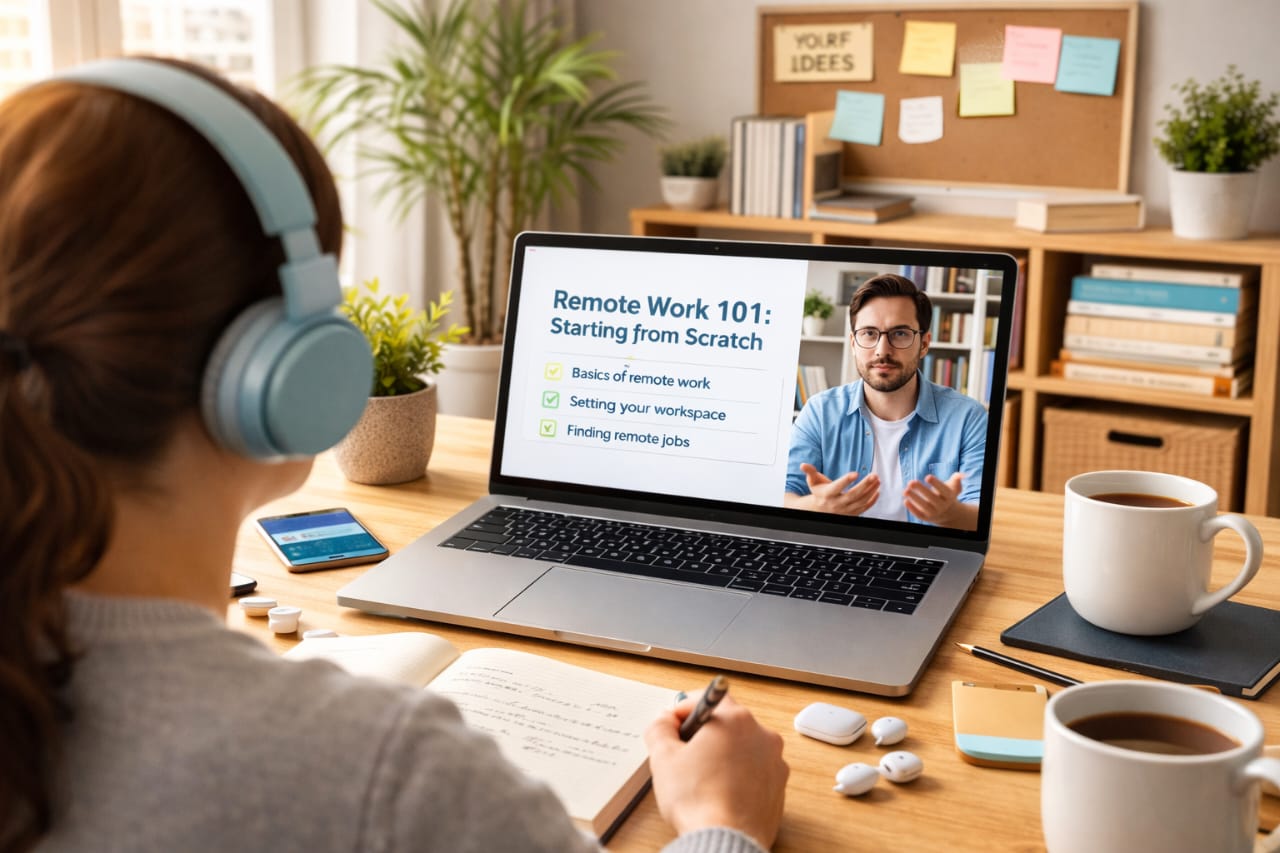
The biggest misunderstanding around remote work is that it is only available to experienced professionals or people in tech. In reality, a large number of roles are designed for beginners, especially in areas where communication, organisation, and reliability matter more than advanced technical skills.
From what I’ve seen, the main reason people struggle to get started is not because opportunities are limited, but because they approach the process without structure. They apply randomly, switch between different paths, and give up too early when results don’t come immediately.
Once you understand that remote work is a system — not a shortcut — everything changes. You stop guessing and start building toward a clear outcome. That shift alone is what separates people who succeed from those who remain stuck.
If you’re thinking long-term, this starting point connects directly to how remote careers grow over time. You can see the bigger picture here: high income tech skills for remote jobs, which explains how beginners eventually move into higher-paying roles.
Step-by-Step Process to Start Remote Work (Beginner)
Understanding how to start remote work in the UK with no experience becomes much easier when you break it into clear steps. Instead of trying to do everything at once, you focus on one stage at a time and build momentum gradually.
Step 1: Choose a Clear Entry Point
The first step is deciding which type of remote role you want to start with. This is important because it gives you direction and prevents confusion later in the process. Without a clear entry point, most people waste time jumping between different options.
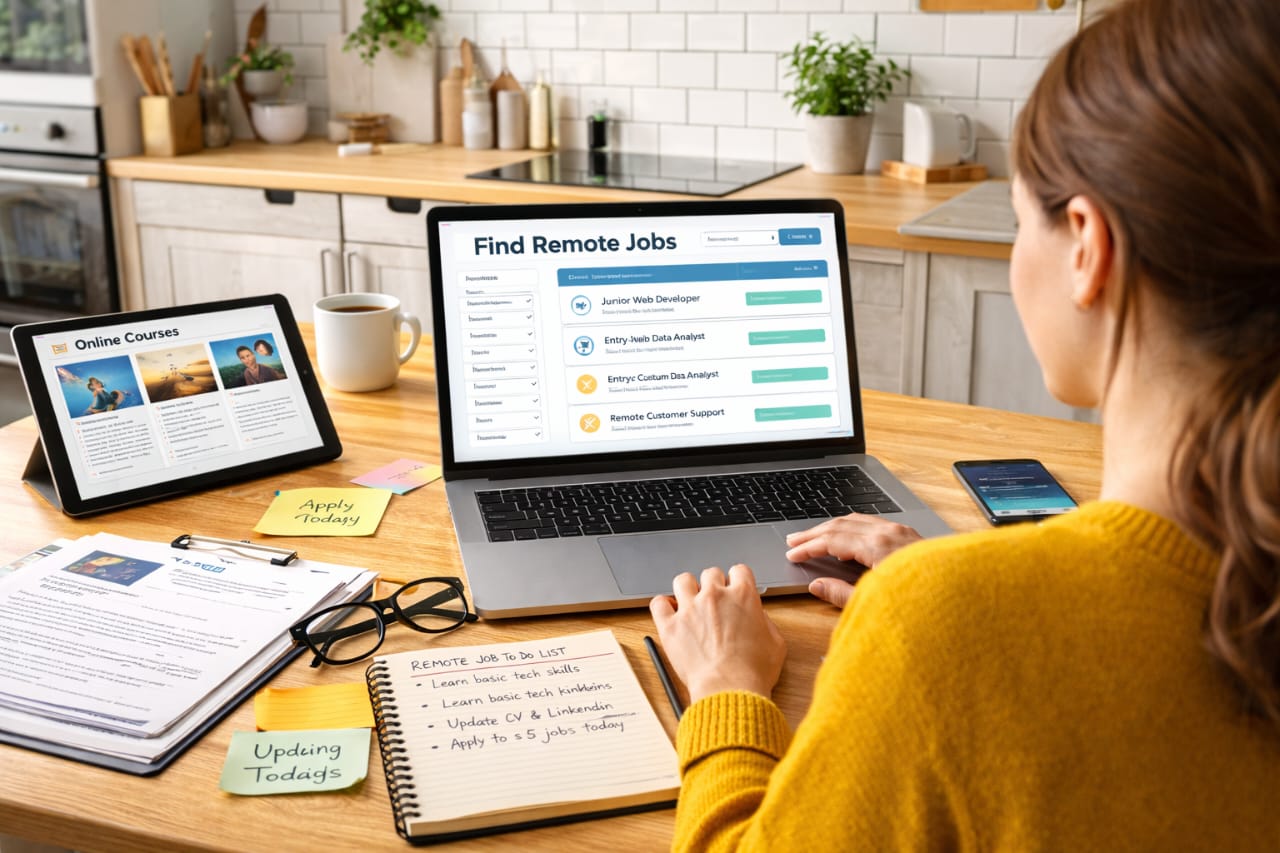
Beginner-friendly roles include customer service, virtual assistant work, data entry, content moderation, and junior sales roles. These positions are widely available in the UK and require minimal experience to get started.
In my experience, people who commit to one path early tend to make faster progress because they focus their energy instead of spreading it too thin.
Step 2: Learn the Basic Skills Required
Once you choose a role, the next step is building the basic skills needed to perform it. You don’t need advanced knowledge, but you must be comfortable with everyday tools used in remote work environments.
This includes writing professional emails, using tools like Google Docs and spreadsheets, attending online meetings, and managing simple tasks independently. These are the core skills employers expect even from beginners.
What matters here is not perfection but familiarity. The more comfortable you are with these tools, the more confident you become during applications and interviews.
Step 3: Build Simple Proof of Work
One of the fastest ways to stand out as a beginner is by showing what you can do instead of just saying it. This is where a simple portfolio becomes useful, even if you have no prior experience.
For example, if you’re interested in customer support, you can create sample responses to customer questions. If you’re exploring admin roles, you can show how you organise tasks or manage schedules.
This step is often overlooked, but it makes a big difference. Employers are more likely to trust someone who can demonstrate ability than someone who only lists skills on a CV.
Step 4: Optimise Your CV and Online Presence
Your CV does not need to be perfect, but it needs to be relevant. Focus on transferable skills like communication, problem-solving, time management, and attention to detail. These are valuable in almost every remote role.
On LinkedIn, make it clear that you are open to remote opportunities. Include the tools you’ve learned and any small projects you’ve completed. This increases your visibility when recruiters search for candidates.
From what I’ve seen, even small improvements in how you present yourself can significantly increase your chances of getting responses.
Step 5: Apply Consistently With a System
This is where most people fail. They apply to a few jobs, don’t get immediate results, and stop. In reality, remote job applications require consistency and patience.
A practical approach is to apply to 10–20 relevant roles each week while improving your skills at the same time. Over time, this increases your chances of getting interviews and feedback.
While applying, staying connected is important because many opportunities move quickly. Beginners often rely on reliable mobile data for remote job applications to ensure they can respond to emails, interviews, and updates without delay.
Step 6: Understand That Progress Takes Time
Remote work is not instant, but it is predictable when you follow the right process. Most beginners do not get results in the first week, and that’s normal.
What matters is consistency over time. As your skills improve and your applications become more targeted, your chances increase naturally.
I’ve seen people go from zero experience to their first remote job within a few months simply by staying consistent and not overcomplicating the process.
Entry-Level Remote Jobs You Can Start With in the UK
Knowing where to start helps you avoid wasting time on roles that require experience you don’t yet have. The goal is to choose jobs that are realistic and accessible at your current level.
Job Role |
Average Salary (UK) |
Why It’s Beginner-Friendly |
|---|---|---|
Customer Service Representative |
£22,000 – £26,000 |
Focuses on communication and support tasks |
Virtual Assistant |
£24,000 – £30,000 |
Handles simple admin and organisational work |
Data Entry Specialist |
£20,000 – £25,000 |
Requires accuracy rather than experience |
Content Moderator |
£22,000 – £26,000 |
Entry-level role with clear guidelines |
Sales Development Representative |
£25,000 – £35,000+ |
Combines communication with growth potential |
These roles provide a practical starting point and create a pathway into more specialised and higher-paying opportunities over time.
What Skills Do You Need to Start Remote Work Successfully?
One of the biggest advantages when learning how to start remote work in the UK with no experience is that you don’t need advanced technical skills to begin. However, there are certain core skills that every beginner must develop to succeed in a remote environment.
These skills are not complicated, but they are essential. They determine how well you perform, how quickly you adapt, and how confident you feel when applying for roles.
Communication Skills
Remote work depends heavily on communication. Since you are not physically present, your ability to express yourself clearly through messages, emails, and calls becomes extremely important.
This includes writing clear emails, responding professionally, and understanding instructions without constant supervision. Strong communication is often the difference between getting hired and being overlooked.
Time Management and Discipline
Working remotely means managing your own time. There is no manager physically watching you, so your ability to stay focused and organised becomes critical.
Simple habits like setting daily goals, avoiding distractions, and completing tasks on time make a huge difference in how you are perceived as a remote worker.
Basic Technical Skills
You don’t need to be a tech expert, but you must be comfortable using basic tools. This includes navigating software, joining virtual meetings, and using productivity tools efficiently.
Employers expect you to adapt quickly to digital environments, even in entry-level roles.
Problem-Solving Ability
Remote workers are often expected to solve small problems independently. Instead of waiting for instructions, you should be able to think through situations and find simple solutions.
This skill builds trust and makes you more valuable over time.
Where to Find Remote Jobs in the UK as a Beginner
Knowing where to look is just as important as knowing what to apply for. Many beginners fail because they rely on only one platform or apply in the wrong places.
The UK has several reliable platforms where remote jobs are regularly posted.
Job Boards
Platforms like Indeed, LinkedIn Jobs, Reed, and Totaljobs regularly list remote opportunities. These are the most accessible starting points for beginners.
Using filters like “remote” or “work from home” helps narrow your search and saves time.
Freelance Platforms
Websites like Upwork, Fiverr, and PeoplePerHour allow beginners to start with small tasks and gradually build experience.
This is often one of the fastest ways to get your first paid remote work, even without formal experience.
Company Career Pages
Some companies hire directly through their websites. Checking career pages of remote-friendly companies can give you access to opportunities not listed on job boards.
This approach requires more effort but can lead to better long-term roles.
What Tools Do You Need to Start Remote Work?
Remote work depends heavily on the tools you use. Without the right setup, even simple tasks can become difficult and frustrating.
The good news is that you don’t need expensive equipment to get started. A basic but reliable setup is enough.
Essential Equipment
- Laptop or desktop computer
- Stable internet connection
- Headphones for meetings
- Quiet workspace
These are the minimum requirements for most entry-level remote roles.
If your work involves moving between locations or staying connected while applying, many beginners use flexible transport options for remote workers to maintain productivity without disruption.
Getting familiar with your environment also helps, especially if you are working remotely in different locations. Some people use local activity and city exploration platforms to settle in quickly while maintaining focus.
Software Tools
Most remote teams rely on tools like Slack, Zoom, Google Workspace, and Notion. These platforms help with communication, collaboration, and task management.
Learning how to use these tools early gives you an advantage during applications and interviews.
Common Mistakes Beginners Should Avoid
Many beginners delay their progress by making avoidable mistakes. Understanding these early helps you move faster and avoid frustration.
Applying Without Direction
Applying to every job you see without focusing on a specific role leads to confusion and poor results. Clarity is more important than quantity.
Relying Only on a CV
Without proof of work, it becomes harder to stand out. Even simple examples of what you can do can improve your chances.
Expecting Immediate Results
Remote work takes time. Not getting a response in the first week does not mean it’s not working.
Ignoring Skill Development
Applying without improving your skills slows your progress. Learning and applying should happen at the same time.
How Long Does It Take to Get Your First Remote Job?
This is one of the most common questions beginners ask. The timeline varies depending on consistency, skill level, and how well you follow the process.
- 1–2 weeks: Learning basics and preparing
- 2–6 weeks: Applying and improving
- 1–3 months: First job opportunity (average)
From what I’ve seen, people who stay consistent and focused usually get results faster than those who keep restarting.
Frequently Asked Questions
Can I start remote work in the UK without any experience?
Yes, many entry-level roles are designed for beginners and require only basic skills.
What is the easiest remote job to start with?
Customer service, virtual assistant, and data entry roles are among the easiest to begin with.
Do I need a degree?
No, most remote jobs focus on skills and ability rather than formal education.
How can I increase my chances of getting hired?
Focus on one role, build basic skills, create proof of work, and apply consistently.
Final Thoughts
How to start remote work in the UK with no experience is not about finding shortcuts but about following a clear and structured path. Once you focus on the right steps, build relevant skills, and stay consistent, remote work becomes achievable.
The opportunity is already there — what matters is how you position yourself to take advantage of it.