
Europemigrationguide.com is reader-supported. When you buy through links on our site, we may earn an affiliate commission.
High income tech skills for remote jobs are no longer limited to people with computer science degrees or years of coding experience. What has changed in recent years is not just the tools, but the way companies evaluate talent. Businesses are now focused on outcomes—how efficiently you can solve problems, improve systems, and deliver measurable results. That shift has opened the door for beginners who are willing to learn practical, tool-based skills instead of following long, traditional learning paths that delay real-world application.
Quick Answer: High income tech skills for remote jobs include no-code development, data analytics, AI-powered workflows, and digital marketing. These skills allow beginners to earn remotely without a degree by focusing on practical tools like Airtable, Webflow, Zapier, and analytics dashboards that solve real business problems.
The real advantage today comes from accessibility combined with speed. In the past, entering the tech industry often meant spending years learning programming languages before building anything useful. Now, that entry barrier has been reduced significantly. Visual tools, automation platforms, and AI-assisted systems allow you to start building almost immediately. Within weeks, you can create workflows, dashboards, and systems that businesses actually use. This shift has completely redefined what it means to “learn tech,” making it more practical, more direct, and far more aligned with real-world needs.
However, this accessibility also creates a new kind of problem—overexposure to too many options. Many beginners fall into the trap of trying to learn everything at once: AI, coding, design, data analysis, and multiple tools simultaneously. While this feels productive at the beginning, it quickly leads to confusion and lack of direction. Instead of developing a clear, monetizable skill, they end up with scattered knowledge that is difficult to apply. The real advantage comes from narrowing your focus, choosing one high-income skill, and understanding how it directly solves a business problem before expanding further.

Why High Income Tech Skills Matter More Than Ever in Remote Work
The remote job market has evolved into a performance-driven ecosystem where location, background, and formal qualifications carry less weight than actual output. Companies are no longer restricted to hiring locally, giving them access to global talent.
This shift increases competition, but it also expands opportunities for those who can demonstrate practical ability and deliver results quickly. In this environment, having a degree is no longer a guarantee of success—being able to execute is what matters most.
Businesses today are under constant pressure to move faster, reduce operational costs, and improve efficiency without increasing team size unnecessarily. This is where high income tech skills become valuable. Instead of hiring large technical teams, companies are increasingly relying on individuals who can build lightweight systems, automate repetitive processes, and create structured workflows using modern tools. A well-built automation or dashboard can replace hours of manual work, making even beginner-level contributions highly impactful when applied correctly.
As a result, roles such as no-code developers, data analysts, and digital marketers are growing rapidly across remote job platforms. These roles sit at the intersection of business needs and technical execution. You are not just interacting with software—you are solving operational problems, improving visibility, and enabling better decision-making. That direct connection to business value is what makes these skills both in demand and well-paid.
If you are still unsure which roles align best with your current level, this guide explains beginner-friendly options clearly: best remote jobs for beginners no experience. Understanding where you fit in the market helps you make more focused decisions instead of guessing your way forward.
Once this shift becomes clear, your entire learning approach changes. Instead of chasing trends or jumping between tools, you begin to evaluate skills based on their ability to generate value. That mindset alone puts you ahead of most beginners who are still stuck in the cycle of passive learning without direction.
The Core High Income Tech Skills You Should Focus On
Not every tech skill offers the same path to income, especially for beginners. Some require long learning curves before you can apply them, while others allow you to start quickly and improve through real-world experience. The most effective skills share three characteristics: high demand in the market, clear practical application, and a relatively fast entry point. Focusing on these types of skills allows you to move from learning to earning without unnecessary delays.
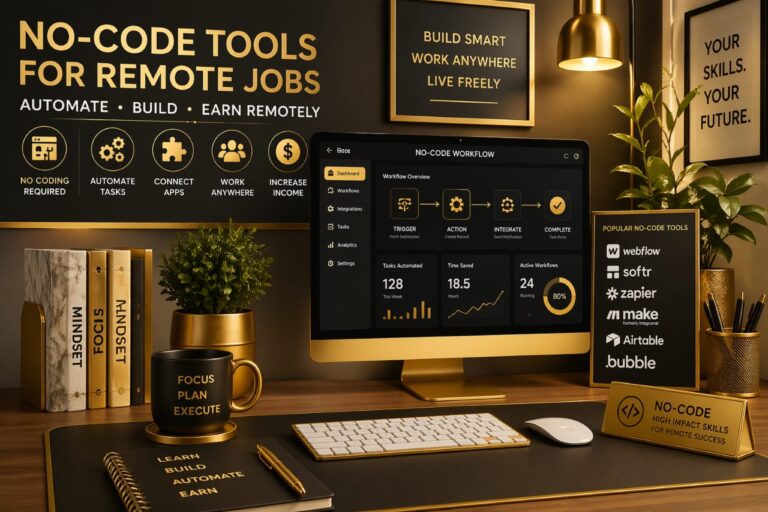
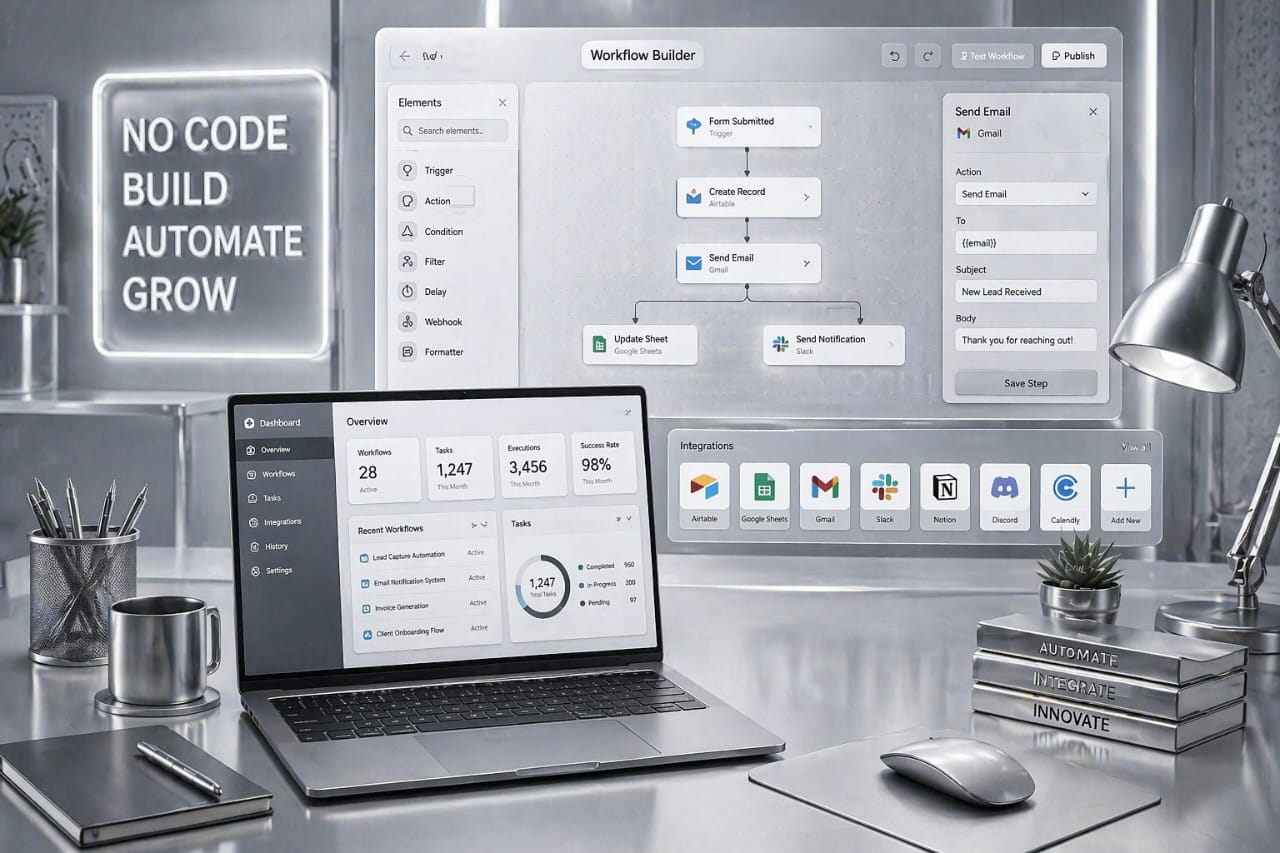
No-Code Development (Webflow, Airtable, Zapier): This is one of the most accessible and fast-growing areas in remote work. Instead of writing complex code, you build systems visually by connecting tools and structuring workflows. You can create websites, automate operations, and manage business processes without needing a technical background. For example, businesses use Airtable to organise internal data and Zapier to automate repetitive tasks such as lead tracking or email notifications. These are not experimental use cases—they are everyday business needs that companies are actively paying for.
Data Analytics and Dashboard Creation: Every business generates data, but very few use it effectively. This gap creates an opportunity for individuals who can organise, interpret, and present data in a way that supports decision-making. Tools like Excel, Google Sheets, and Airtable allow you to structure raw data, while dashboards transform that data into clear insights. Even at a beginner level, the ability to create simple reporting systems can make you valuable because it helps businesses move from guesswork to informed decisions.
AI Tools and Workflow Automation: The growing use of AI in business is not limited to advanced engineering roles. Many companies need people who can apply AI tools within existing workflows to improve productivity and reduce manual effort. This includes automating content processes, generating structured reports, and integrating AI outputs into business systems. The value here comes from application, not complexity—knowing how to use AI effectively within a workflow is often more important than understanding how it is built.
Digital Marketing and SEO: Visibility remains one of the most critical needs for any business operating online. Skills such as search engine optimisation, content structuring, and performance tracking help companies attract and retain customers. Unlike traditional marketing, digital marketing provides measurable results, which makes it easier to demonstrate value. When you can show how your work increases traffic, engagement, or conversions, it becomes much easier to justify higher pay.
What connects all these skills is their practicality. You are not learning abstract concepts—you are building solutions that businesses can immediately use. That direct application is what shortens the gap between learning and earning.
How These Skills Translate Into Real Remote Income
Understanding a skill in isolation is not enough; what matters is how that skill creates measurable impact. High income tech skills are valuable because they are directly tied to business outcomes such as time savings, cost reduction, and improved efficiency. When your work contributes to any of these areas, it becomes easier for companies to justify paying for your services, even if you are relatively new.
For instance, a no-code specialist might build an automated onboarding system that replaces manual processes. Instead of handling repetitive tasks individually, the business can operate more efficiently with fewer resources. The time saved translates into reduced operational costs, which makes the solution financially valuable. Similarly, a data analyst who creates a clear performance dashboard enables better decision-making, helping businesses identify trends and act quickly. That clarity directly influences revenue and growth.
This is why focusing on outcomes rather than tools is essential. Tools are only a means to an end; what businesses actually care about is the result those tools produce. When you approach learning from this perspective, you naturally begin to think in terms of solutions rather than features, which significantly increases your value in the remote job market.
If you want to understand where to find opportunities to apply these skills, this guide breaks it down clearly: best websites to find remote jobs for beginners. Knowing where demand exists helps you position your skills more effectively.
Your Work Setup Directly Affects Your Skill Growth
One factor that is often underestimated when learning high income tech skills is the working environment itself. Because most of these tools are browser-based and require constant switching between tabs, platforms, and dashboards, your setup plays a direct role in how efficiently you can learn and work. A slow or unstable system does not just affect comfort—it disrupts focus, reduces consistency, and ultimately slows down your progress.
For example, when working with tools like Webflow, Airtable, and multiple dashboards simultaneously, performance becomes critical. A system that struggles to handle multitasking can interrupt your workflow and make even simple tasks feel frustrating. This is why many remote professionals invest in a high-performance laptop designed for multitasking and remote workflows, ensuring that their tools run smoothly without constant delays or crashes that break concentration.
Efficiency also depends on precision and control, especially when managing workflows, editing data, or designing systems. Small delays in navigation or input can accumulate over time, reducing overall productivity. Using a precision-focused productivity mouse built for long remote work sessions allows for smoother interaction with tools, faster execution, and less strain during extended periods of work.
These elements may seem minor at first, but they have a compounding effect. A stable and efficient setup reduces friction, allowing you to focus entirely on building and learning. Over time, that consistency becomes one of the biggest drivers of progress, separating those who improve steadily from those who struggle to maintain momentum.
The Biggest Mistakes Beginners Make When Learning Tech Skills
Most beginners do not struggle because they lack ability; they struggle because their approach does not align with how skills are actually applied in real-world scenarios. One of the most common mistakes is attempting to learn multiple high-income skills at the same time without a clear priority. While this approach may feel productive initially, it often results in fragmented knowledge that cannot be applied effectively. Without depth in a single area, it becomes difficult to demonstrate competence or deliver meaningful results.
Another critical mistake is relying too heavily on passive learning. Watching tutorials, saving resources, and consuming educational content can create the illusion of progress, but without practical application, that knowledge remains unused. The difference between those who move forward and those who remain stuck is consistent execution. Building even small projects—such as simple automations, basic dashboards, or structured workflows—transforms theoretical understanding into practical skill. These projects also serve as proof of ability, which is far more valuable than certificates or completed courses.
There is also a tendency to underestimate the importance of communication and problem-solving within remote work environments. Technical ability alone is not enough if you cannot clearly explain your process or align your work with business needs. Clients and employers value clarity, reliability, and adaptability just as much as technical skill. Being able to understand a problem, propose a solution, and communicate that solution effectively is what turns a skill into a paid opportunity.
The more effective path is straightforward but requires discipline. Focus on one skill, understand its real-world application, and build projects that reflect actual business use cases. Improve incrementally, seek feedback where possible, and refine your approach over time. This method creates not just knowledge, but capability—and that capability is what ultimately leads to consistent income in the remote job market.
How to Actually Learn High Income Tech Skills (Without Wasting Time)
One of the biggest challenges beginners face is not a lack of resources but an overload of them. There are countless tutorials, courses, and platforms available, which creates the illusion that more information leads to faster progress. In reality, the opposite is often true. Without structure, learning becomes scattered, and instead of building usable skills, you accumulate disconnected knowledge that is difficult to apply in real situations. The most effective approach is not to learn more—it is to learn with intention and direction.
The first step is choosing one skill based on its practical application, not its popularity. For example, instead of saying “I want to learn AI,” a more effective approach would be “I want to automate content workflows using AI tools.” This level of clarity immediately shifts your learning from abstract to practical. Once you define the use case, every tool, tutorial, or resource you consume becomes relevant to that goal, which reduces confusion and increases efficiency.
The second step is to build while you learn. Instead of waiting until you feel ready, you start creating small projects immediately. These projects do not need to be perfect—they need to be functional. A simple automation workflow, a basic dashboard, or a small website is enough to begin. Each project reinforces your understanding and reveals gaps in your knowledge, allowing you to improve naturally through experience rather than theory.
The third step is consistency. Learning a high income skill is not about intensity—it is about repetition. Spending a few focused hours each day building and improving systems produces better results than irregular bursts of effort. Over time, these consistent actions compound into real capability, which is what employers and clients are looking for.
How to Turn Your Skills Into Paid Remote Work
Learning a skill is only part of the process; the next step is positioning that skill in a way that makes it valuable to employers or clients. Many beginners struggle at this stage because they focus too much on what they have learned and not enough on how that knowledge translates into solutions. Businesses are not paying for your skill—they are paying for the problem it solves. This distinction is critical because it changes how you present yourself in the market.
Instead of saying “I know how to use Airtable,” a stronger approach would be “I can build structured systems that help businesses manage operations more efficiently.” This reframing shifts the focus from tools to outcomes, making your value clearer and more compelling. The same applies to automation, data analysis, and digital marketing. When you position your skills as solutions, you stand out even as a beginner.
Applying for roles also requires a structured approach. Sending generic applications rarely produces results because it does not demonstrate understanding or relevance. A better strategy is to tailor each application based on the specific needs of the role. If a company is looking for automation support, highlight projects where you built workflows. If they need data organisation, show examples of dashboards or systems you created. This targeted approach significantly increases your chances of getting responses.
If you want to understand this process in more detail, this guide explains it step by step: how to apply for remote jobs without experience. Following a structured application process ensures that your effort translates into real opportunities instead of random attempts.
Building a Workflow That Matches Real Remote Work
As your skills improve, the way you work becomes just as important as what you know. High income tech skills often require managing multiple tools, switching between dashboards, and handling different tasks simultaneously. Without an organised workflow, even simple processes can become inefficient and overwhelming. This is why developing a structured way of working is essential for long-term success.
A typical workflow might involve building an automation in one tool, managing data in another, and presenting results through a dashboard. This requires constant multitasking, which can quickly become difficult without the right setup. Many remote professionals rely on a 27-inch 4K monitor designed for multi-window productivity and dashboard management to handle multiple applications at once without constantly switching between tabs. This makes it easier to maintain focus and reduces the mental load associated with complex workflows.
In addition to screen space, physical setup plays a role in efficiency. A cluttered or uncomfortable workspace can reduce focus and slow down execution, especially during long working sessions. Using a structured docking and workspace setup for better posture and organisation helps create a cleaner working environment, making it easier to manage multiple tools and maintain consistency throughout the day.
These adjustments are not about comfort alone—they directly impact how effectively you can apply your skills. A well-structured workflow allows you to work faster, reduce errors, and maintain focus, which ultimately improves the quality of your output.
Staying Focused and Consistent in a Remote Environment
One of the biggest challenges in remote work is maintaining focus over long periods without external structure. Unlike traditional work environments, remote work requires self-discipline, which can be difficult to sustain without the right systems in place. Distractions, interruptions, and lack of routine can quickly reduce productivity if not managed properly.
Creating a focused environment starts with removing unnecessary distractions. Many professionals use noise-isolating headphones for deep work and uninterrupted focus to maintain concentration during long sessions. This simple adjustment can significantly improve the quality of work, especially when dealing with complex tasks that require sustained attention.
Consistency also comes from having a structured routine. Dividing your day into focused work blocks, tracking progress, and setting clear goals helps maintain momentum. Over time, this routine becomes a system that supports your growth, making it easier to stay consistent even when motivation fluctuates.
If you want to understand how to build consistency during your job search and skill development, this guide explains it clearly: how to stay consistent while job hunting. Consistency is what turns effort into results, especially in a remote environment where discipline is self-driven.
Frequently Asked Questions
Can I learn high income tech skills without a degree?
Yes, you can learn high income tech skills without a degree because the remote job market prioritises practical ability over formal qualifications. What matters most is your ability to solve problems, build systems, and demonstrate results through real projects. Many beginners enter the field by focusing on tools and workflows that allow them to create immediate value.
How long does it take to learn a high income tech skill?
The time required depends on your consistency and approach. With focused effort and practical learning, many beginners can start building simple projects within a few weeks. However, developing confidence and proficiency takes longer and improves through continuous application rather than passive learning.
Which tech skill is best for beginners?
No-code development and automation are often the best starting points because they allow you to build functional systems quickly without needing programming knowledge. These skills also have clear real-world applications, which makes it easier to transition from learning to earning.
Do I need expensive tools to get started?
No, most no-code and digital tools offer free or affordable plans that are sufficient for beginners. The key is not the cost of the tools but how effectively you use them to solve problems and create value.
Is remote tech work sustainable long term?
Yes, remote tech work is sustainable because businesses continue to rely on digital systems, automation, and online visibility. As long as companies need to improve efficiency and compete online, the demand for these skills will remain strong.
Conclusion
High income tech skills for remote jobs offer one of the most practical and accessible paths into the modern digital workforce. They remove traditional barriers such as degrees and long learning periods, allowing beginners to focus on building real solutions that businesses need.
Success comes from learning with purpose, not trying to learn everything at once. By focusing on one skill, building consistently, and applying your knowledge to real-world problems, you create a clear path from learning to earning. Over time, this approach not only builds skill but also creates opportunities that grow with your experience.
Remote work continues to evolve, but one thing remains constant: those who can solve problems effectively will always have opportunities. When you combine practical skills with consistent execution, you position yourself to succeed in a space where results matter more than background.