
Europemigrationguide.com is reader-supported. When you buy through links on our site, we may earn an affiliate commission.
How to apply for remote jobs without experience is not about sending hundreds of applications and hoping something works. It is about understanding how remote hiring systems operate and positioning yourself in a way that makes employers trust you instantly. Most beginners fail at this stage because they treat remote jobs like traditional office roles, when in reality the expectations, process, and evaluation criteria are completely different.
Quick Answer: To apply for remote jobs without experience, you need to focus on one role, build proof of your ability, optimise your resume for ATS systems, apply strategically instead of randomly, and present your skills clearly so employers can see value immediately without confusion.
If you want to understand how to apply for remote jobs without experience and actually get responses, this guide breaks down the exact steps you need to follow as a beginner.
One important thing to understand early is that remote employers are not primarily looking for experienc—they are looking for clarity, reliability, and execution. They want to know if you can complete tasks without supervision, communicate properly, and stay consistent over time. This means your application must reduce doubt, not create more questions in the employer’s mind.
Most beginners struggle because they present themselves in a weak or unclear way. They either over-explain without proof or under-explain without direction. When there is no clear positioning, no structured application, and no visible evidence of ability, employers simply move on to the next candidate without hesitation.
Once you understand that remote hiring is about reducing friction for the employer, everything changes. Your goal is no longer to “apply for jobs”—your goal is to make it easy for someone to say yes to you without needing extra effort to figure you out.
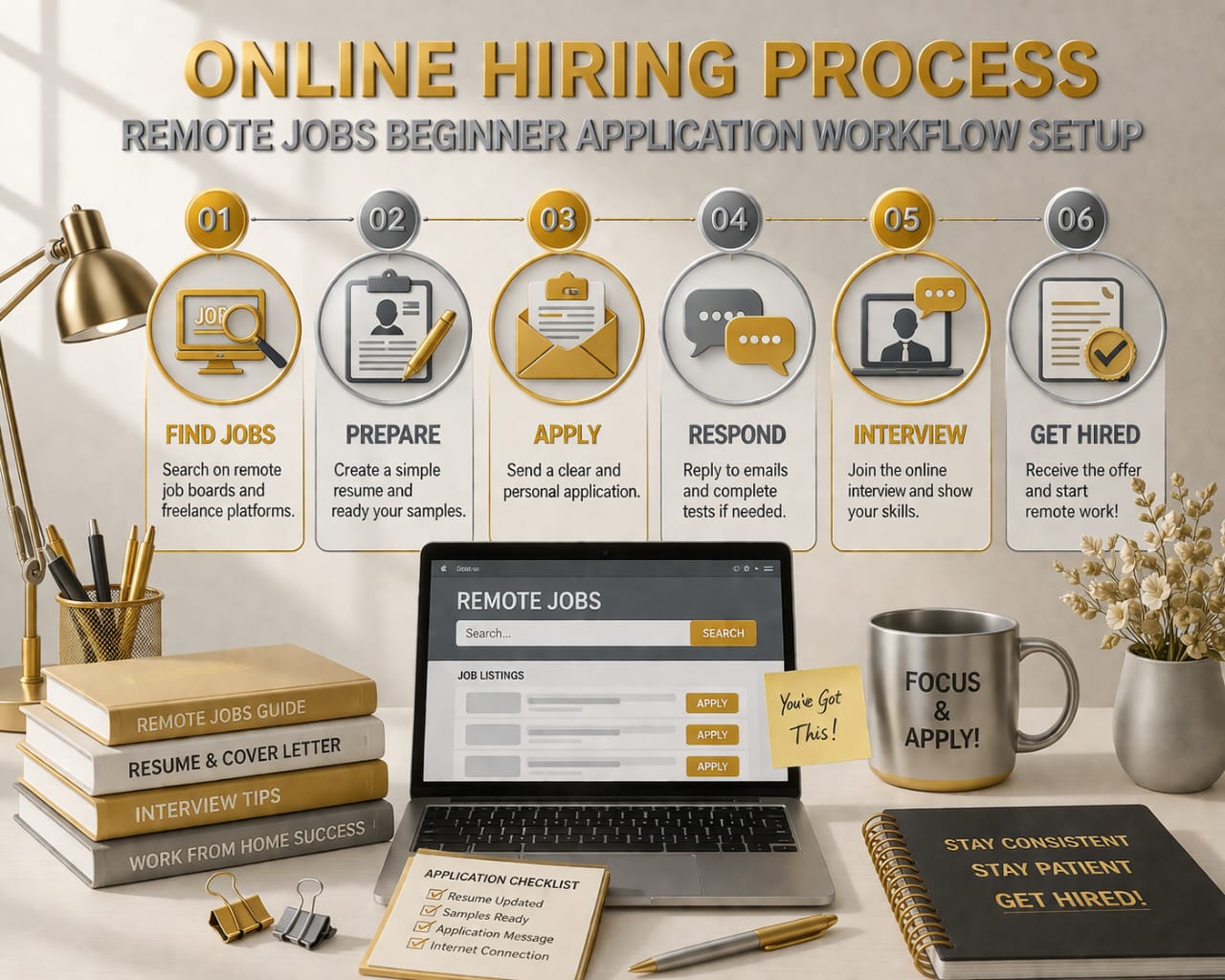
Understanding How Remote Hiring Actually Works
Remote hiring is built around speed and filtering. Employers often receive a large number of applications, and they do not have the time to review each one in detail. Instead, they scan quickly for signals that indicate whether a candidate is worth considering or not. If your application does not communicate value immediately, it gets ignored within seconds.
This is where most beginners lose opportunities without even realising it. They assume their application will be carefully read, but in reality, it is scanned for clarity, structure, and relevance. If your message is confusing, too long, or not aligned with the role, it creates friction—and friction leads to rejection.
Another important factor is the use of Applicant Tracking Systems (ATS). These systems filter resumes based on keywords, formatting, and structure before a human ever sees them. If your resume is not optimised, it may never reach the hiring manager at all, no matter how capable you are.
This is why random applications fail. Without understanding how the system works, you are competing blindly. Once you understand the process, you stop guessing and start applying with intention and structure.
Step 1: Focus on One Role and Build Clear Positioning
One of the biggest mistakes beginners make is trying to apply for multiple roles at the same time. This leads to generic applications that do not clearly communicate what you actually do. When employers cannot quickly understand your role, they lose interest immediately.
Instead of spreading yourself thin, focus on one clear path. Choose a role that matches your current ability level, such as virtual assistance, customer support, data entry, or writing. When you focus on one area, your application becomes more precise and more convincing.
Clarity is powerful because it reduces confusion. When an employer sees exactly what you offer, they are more likely to consider you seriously. This is not about limiting yourself—it is about increasing your effectiveness by being specific.
If you are unsure which beginner roles are realistic, this guide breaks it down clearly: best remote jobs for beginners no experience.
Once your positioning is clear, everything else in your application becomes easier to structure and improve.
Step 2: Build Proof That Removes Doubt
You do not need formal experience to prove that you can work. What employers are actually looking for is evidence that you understand the task and can complete it correctly. This is where many beginners misunderstand the process—they wait for experience instead of creating proof.
Proof can be simple but effective. If you want to work in customer support, you can create mock responses to common customer issues. If you want to be a virtual assistant, you can organise tasks using a digital tool. If you are interested in writing, you can publish sample content.
What matters is not perfection, but demonstration. When you show that you can do the work, you immediately stand out from other applicants who are only making claims without evidence.
This approach changes how employers see you. Instead of being a “beginner,” you become someone who is already practising the role. That shift alone can significantly increase your chances of getting a response.
Step 3: Structure Your Resume for Visibility and Clarity
Your resume is one of the most important parts of your application because it determines whether you get seen or ignored. Many beginners make the mistake of focusing on design instead of structure, which reduces readability and confuses both systems and hiring managers.
A simple, clean format works best. Use clear headings, consistent spacing, and straightforward language. Avoid unnecessary graphics or complex layouts that can interfere with how your resume is processed by ATS systems.
Keywords are also critical. Your resume should reflect the exact language used in the job description. If a role mentions tools or skills, those terms should appear naturally in your resume to improve relevance and visibility.
The goal is not to impress visually—it is to communicate clearly. When your resume is easy to read and aligned with the role, your chances of moving forward increase significantly.
Step 4: Write Applications That Are Clear and Direct
Most applications fail because they try to say too much without actually saying anything useful. Long messages filled with generic phrases do not create impact—they create confusion. Employers want clarity, not complexity.
A strong application focuses on three things: what you can do, how it helps, and why it matters. When you structure your message this way, it becomes easier for the employer to understand your value quickly.
Instead of writing long paragraphs, focus on specific examples. Even small examples can be powerful if they clearly show your ability. This builds trust and makes your application more believable.
Clarity always wins. The easier your message is to understand, the higher your chances of getting a response.
Step 5: Apply With Strategy and Consistency
Applying randomly is one of the biggest reasons beginners do not see results. Sending many applications without direction reduces quality and makes it harder to stand out. It becomes effort without effectiveness.
A better approach is to apply strategically. Focus on relevant roles, apply early, and make small adjustments to each application so it aligns with the job description. This increases your chances without increasing unnecessary effort.
Consistency is equally important. Results do not come from one or two applications—they come from repeated, structured effort over time. As you continue, your approach improves and your results become more predictable.
This is where most people give up too early. Those who stay consistent while improving their strategy are the ones who eventually succeed.
Step 6: Build a Reliable Remote Work Setup
Remote employers are not only hiring skills—they are hiring reliability. They want to know that you can work without interruptions, maintain communication, and deliver tasks consistently. This is why your setup matters more than many beginners realise.
A stable internet connection, a quiet working environment, and the ability to stay organised all contribute to how dependable you appear. Even if you are skilled, poor setup can create doubt and reduce your chances.
If you are working across different locations or platforms, maintaining stable connectivity becomes even more important. Using a reliable global connectivity solution for remote work can help ensure you stay consistent and avoid disruptions during your job search and work process.
When you combine clarity, proof, structure, and consistency, your application becomes strong enough to compete effectively—even without experience. At that point, getting responses becomes a matter of time, not luck.
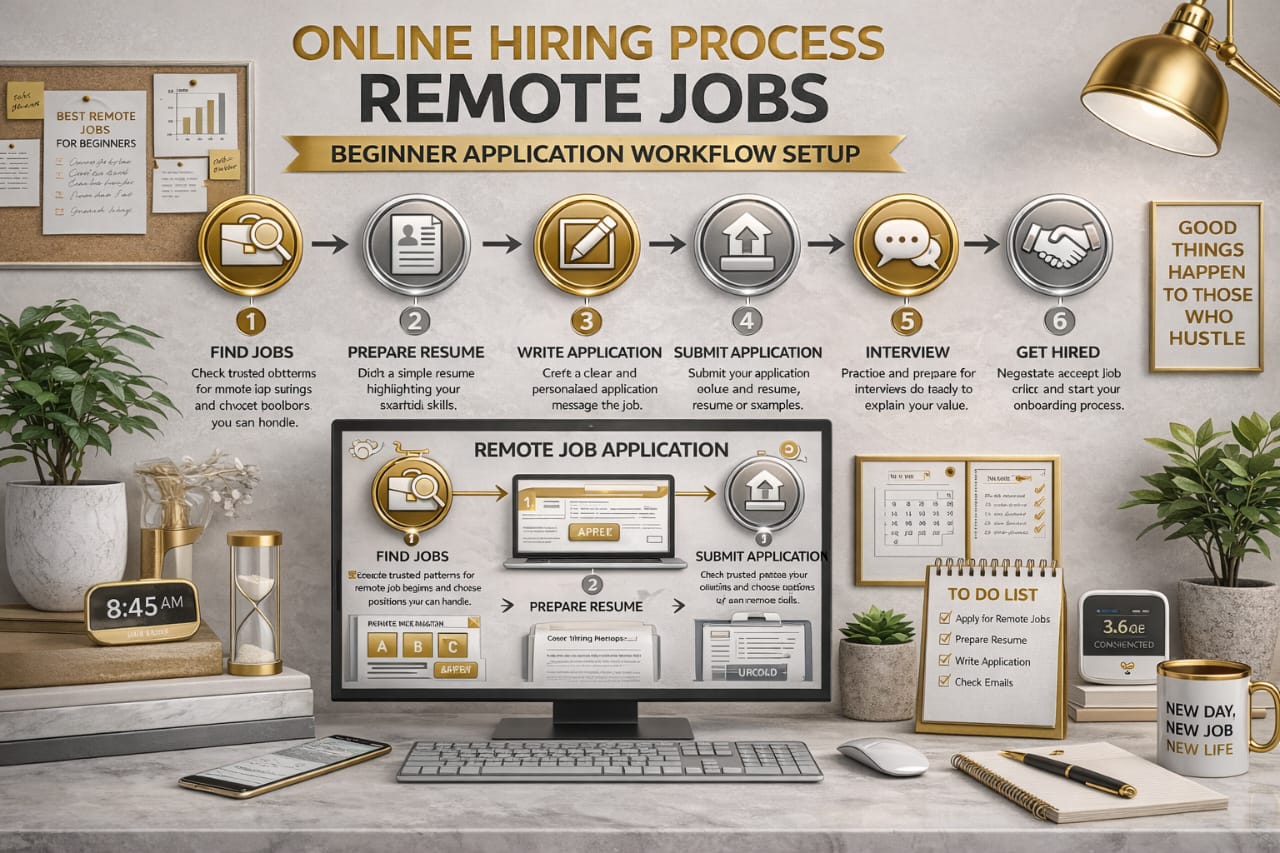
What Happens After You Get Your First Opportunity
Getting your first remote job is only the beginning. What you do after that determines how quickly you grow and how far you can go in the remote work space. Many beginners make the mistake of relaxing too early, thinking they have reached the goal, when in reality they have only just opened the first door to better opportunities.
Once you start working, your focus should shift towards consistency, reliability, and improvement. Employers value people who can deliver tasks correctly, communicate clearly, and meet expectations without constant supervision. These are the qualities that lead to repeat work, referrals, and better-paying opportunities over time.
Your first role also gives you something more important than income—it gives you real proof. That proof makes your future applications stronger because you are no longer presenting yourself as a beginner, but as someone who has already worked in a remote environment and understands how things operate.
Over time, this creates momentum. The more experience you gain, the easier it becomes to secure better roles, increase your rates, and position yourself more effectively. This is why the first opportunity is not the destination—it is the starting point of long-term growth.
If you want to understand how beginners move from their first role to more stable and better opportunities, this guide explains the full progression clearly: how to get your first remote job without experience.
Frequently Asked Questions
Can I apply for remote jobs without any experience at all?
Yes, you can apply for remote jobs without experience as long as you present clear proof of your ability and structure your application properly. Employers are often more interested in how you communicate and execute tasks than formal experience, especially for beginner roles.
How many jobs should I apply for daily?
Instead of focusing on a fixed number, it is better to focus on quality and consistency. Applying to a smaller number of jobs with well-structured applications is more effective than sending many weak applications that do not clearly present your value.
What is the fastest way to get noticed?
The fastest way to get noticed is by being clear and specific. A simple application that shows what you can do, includes proof, and directly addresses the role will always perform better than long and generic messages that lack direction.
Do I need certifications to get started?
No, certifications are not required for most beginner remote jobs. What matters more is your ability to demonstrate that you understand the work and can complete tasks correctly. Proof always carries more weight than certificates.
Why am I not getting responses?
If you are not getting responses, it usually means your application is not clear enough, not targeted, or lacks proof. Improving your structure, positioning, and consistency will significantly increase your chances over time.
Once you start getting responses and managing tasks, improving your workflow becomes important. This guide explains the best productivity systems for remote work to help you stay consistent: best productivity systems for remote work.
Conclusion
How to apply for remote jobs without experience becomes much easier when you stop guessing and start following a structured system. Once you understand how hiring works, build proof, and apply with clarity, the process becomes more predictable and less frustrating.
You do not need to wait until everything is perfect before you start. What matters is taking action, improving your approach, and staying consistent even when results are slow at the beginning. Progress in remote work is built step by step, not overnight.
While building your remote career, maintaining flexibility and stability in different environments can also make a difference. Using reliable remote work protection and travel support helps ensure you stay consistent even when working across different setups or locations.
At the same time, maintaining balance is important for long-term productivity. Exploring your environment and taking structured breaks can improve focus and prevent burnout. Platforms like activity and lifestyle experiences for remote workers help you stay productive while keeping a healthy work rhythm.
With the right system in place, your effort begins to compound. What feels difficult at the start becomes easier with time, and opportunities begin to appear as your experience grows. At that point, getting hired is no longer a question of luck—it becomes a result of structure and consistency.