
Europemigrationguide.com is reader-supported. When you buy through links on our site, we may earn an affiliate commission.
High-income tech skills for remote jobs are now the foundation of earning globally, not just an advantage. Companies no longer hire based on location—they hire based on the value you deliver, which means your income is tied directly to your skills, not where you live.
Quick Answer: The most valuable remote tech skills include AI, cloud computing, data analytics, and cybersecurity. These skills command higher pay because they directly improve business performance, helping companies automate processes, scale systems, and make better decisions.
If you want to focus on tech skills that actually lead to high-paying remote jobs, this guide breaks down the exact skills, salaries, and paths that matter.
The global job market has changed in a way that many people are still trying to catch up with. Employers are no longer focused on where you live or how many hours you work—they are focused on what you can produce. This shift toward output-based work is what separates low-paying remote jobs from high-income opportunities.
In practical terms, this means your earning potential is no longer restricted by your country, your degree, or your past experience. If your skills can solve real business problems, companies are willing to pay for that value, regardless of your location.
This is also why not every digital skill leads to high income. Some skills are easy to learn and widely available, which lowers their value. Others require deeper understanding and problem-solving ability, which increases demand and salary potential.
Understanding this difference is what allows you to move from doing random online work to building a structured, high-income remote career.
What Makes a Tech Skill High Income in Remote Work?
Not all tech skills are equal when it comes to earning potential. High-income skills are directly connected to how businesses operate, scale, and compete. These are the skills companies depend on daily, not optional ones they can easily replace.
From what I’ve seen, these skills usually sit behind the scenes. They are not always visible to customers, but they are essential to the entire system. Without them, platforms stop working, decisions become unreliable, and operations slow down.
There are three clear traits that define high-income tech skills in remote work:
- They influence revenue or reduce operational cost
- They require problem-solving, not repetitive execution
- They scale across systems, users, or large datasets
This is why companies are willing to pay more. They are not paying for your time—they are paying for the results your work creates across their systems.
Once you understand this, it becomes easier to filter out low-value skills and focus only on areas that lead to long-term income growth.
Core High-Income Tech Skill Categories
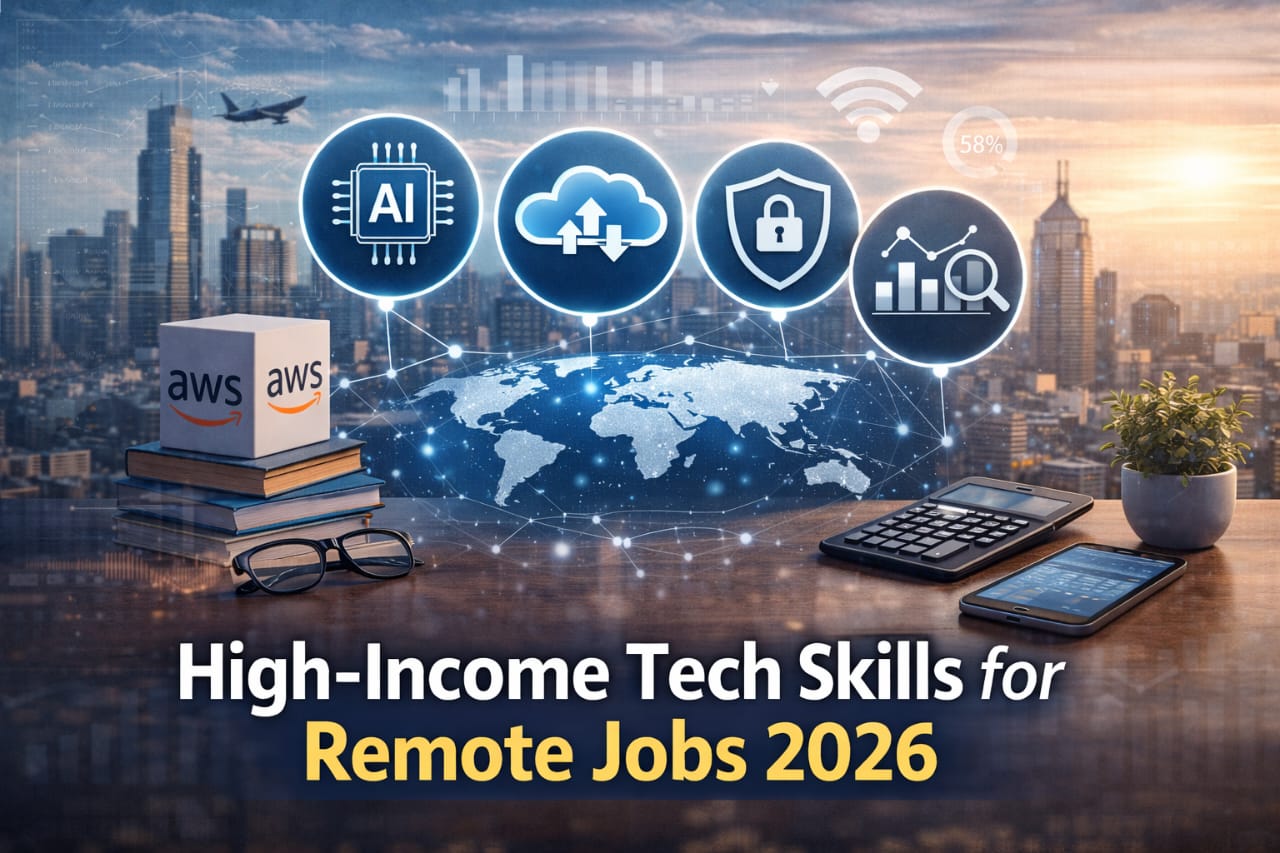
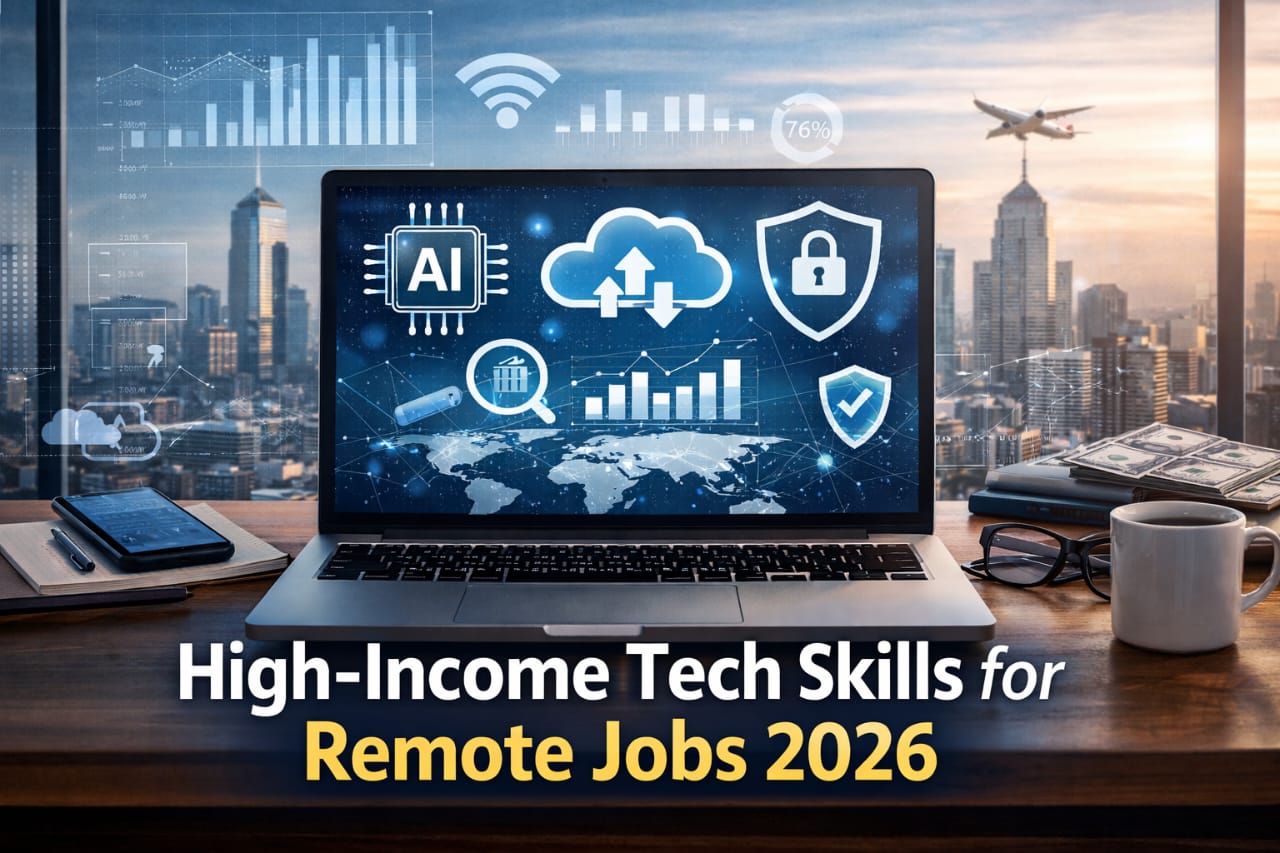
Instead of focusing on random tools or trends, it’s more effective to understand the core categories driving high-income remote work. These categories represent where real demand exists globally and where businesses are investing heavily.
Artificial Intelligence (AI)
Artificial Intelligence is rapidly becoming part of everyday business operations. Companies use AI to automate repetitive tasks, improve customer interactions, and enhance decision-making processes.
Many high-income roles do not require building complex machine learning models. Instead, they focus on applying AI tools to real-world problems, such as automating workflows or improving efficiency across teams.
Professionals who understand how to combine AI tools with business needs are becoming increasingly valuable in remote environments.
Cloud Computing
Cloud computing is the backbone of modern digital systems. Every application, platform, and service relies on cloud infrastructure to function reliably across different regions.
This makes cloud roles critical. Companies need professionals who can design, manage, and scale systems without downtime or performance issues.
Because businesses depend on these systems daily, cloud-related roles remain one of the most stable and high-paying paths in remote work.
Data Analytics
Data has become one of the most valuable assets for businesses. However, data alone is not useful unless it can be interpreted and applied.
Data professionals help companies understand patterns, measure performance, and make informed decisions. This directly impacts revenue, marketing strategies, and operational efficiency.
The ability to turn raw data into clear insights is what makes this skill highly valuable in remote environments.
Cybersecurity
As systems grow, security becomes a priority. Businesses need to protect their data, infrastructure, and operations from threats that could cause financial or reputational damage.
Cybersecurity professionals ensure systems remain secure, reliable, and compliant. This responsibility makes it one of the most trusted and well-paid roles globally.
If you want a deeper breakdown of what to focus on within these categories, this guide explains it clearly: what to learn for high income tech skills.
How to Choose the Right Skill Without Wasting Time
Choosing a direction is where most people lose time. The mistake is trying to learn everything instead of focusing on one path long enough to build real competence.
If you prefer structured systems and logic, cloud computing or cybersecurity may suit you. If you enjoy analysing patterns and working with insights, data analytics becomes a strong option. If you prefer automation and workflow optimization, AI is a practical path.
What matters most is not choosing the “best” skill, but choosing one and committing to it until it becomes valuable. Depth creates income, not surface-level knowledge.
If you’re starting from zero and need a clear step-by-step entry point, this guide breaks it down: how to start remote work in the UK with no experience.
How to Start Building High-Income Skills
Getting started does not require perfection—it requires direction and consistency. The most effective approach is to combine learning with application from the beginning instead of waiting until you feel “ready.”
This means learning the fundamentals, practicing with real tools, and building small projects that demonstrate your understanding. Even simple projects can show employers that you can apply knowledge, not just consume it.
From experience, people who apply what they learn early progress faster because they develop practical problem-solving ability. This is what employers actually look for in remote roles.
While building your skills, staying connected across platforms and tools is important. Many remote professionals rely on reliable global connectivity solutions to maintain consistent access to work environments, learning platforms, and job opportunities.
Salary Potential of High-Income Tech Skills
Understanding how much high-income tech skills for remote jobs actually pay is what makes everything clearer for most people. High-income remote roles are not tied to local salaries, which means your earning potential is based on value, not geography, and this is where the real opportunity begins.
This shift is what separates remote work from traditional employment. Two people doing similar work in different countries can earn completely different amounts, and the deciding factor is not location but the level of impact their work creates.
In simple terms, companies are paying for results, not presence. If your skill helps improve systems, reduce cost, or increase revenue, your value increases regardless of where you are working from.
Here’s what realistic global salary ranges look like across the most in-demand areas:
- AI and Machine Learning: $90,000 – $180,000+ per year
- Cloud Computing / DevOps: $80,000 – $160,000+ per year
- Data Analytics / Data Science: $70,000 – $150,000+ per year
- Cybersecurity: $85,000 – $170,000+ per year
These figures are not random—they reflect how critical these roles are to business operations. The more responsibility your skill carries, the higher your earning potential becomes over time.
If you want to see how these skills translate into real job roles and structured career paths, this breakdown explains it clearly: best high paying remote jobs UK.
Certifications That Support High-Income Skills
Certifications often get a lot of attention, but their role is often misunderstood. They are not what makes you high-income; they simply support the skills that already create value in real work environments.
In remote hiring, certifications act as signals to employers. They show that you understand certain systems or tools, but they do not replace practical ability or real-world problem-solving skills.
What matters most is how you apply what you’ve learned. Without application, certifications remain theoretical and rarely translate into strong earning opportunities.
Some widely recognized certifications that align with high-income paths include:
- AWS Solutions Architect – Cloud systems and infrastructure
- Microsoft Azure Certifications – Enterprise-level environments
- Google Data Analytics – Data-focused roles
- CompTIA Security+ – Entry into cybersecurity
The real advantage comes when certifications are combined with projects. That combination shows both knowledge and execution, which is what employers actually look for.
How to Position Yourself for Remote Opportunities
Learning skills is only one part of the process, but positioning is what determines whether you get hired or overlooked. Many people stop at learning, which is why they struggle to move forward.
From experience, the difference between those who succeed and those who don’t is not always skill level—it’s how clearly they present what they can do.
To stand out in a competitive remote market, you need to focus on three key areas:
- Proof of work: Show real projects, not just claims
- Clear positioning: Define the problem you solve
- Consistency: Apply regularly instead of waiting
When these three elements are in place, opportunities become easier to access because employers can clearly see the value you bring.
This is where many candidates fall short—not because they lack ability, but because they fail to communicate it effectively in a way that stands out.
Common Mistakes That Limit Your Income
Many people spend months learning without seeing meaningful results, and in most cases, the issue is not effort but direction. The wrong approach can slow progress even when you are working consistently.
One of the most common mistakes is trying to learn multiple skills at once. This leads to shallow understanding and makes it difficult to become valuable in any one area.
Another mistake is focusing too much on theory without applying knowledge. Without practical experience, it becomes difficult to prove your ability in real job situations.
- Trying to learn everything at once instead of focusing
- Spending too much time on theory without application
- Waiting too long before applying for roles
- Ignoring communication and presentation skills
A focused and consistent approach always produces better results. Depth creates value, and value is what drives income in remote work.
Remote Work Lifestyle and Practical Considerations
Remote work offers flexibility, but it also requires discipline and structure. Without a proper system, it becomes easy to lose focus or struggle with consistency over time.
Your environment plays a major role in your productivity. Having a stable setup, clear routine, and reliable tools helps you maintain performance across different work conditions.
Many professionals working across locations or managing flexible schedules rely on reliable travel support for remote professionals to maintain stability while working remotely.
Maintaining balance is equally important. Remote work can become isolating without proper breaks, which is why exploring your environment helps improve both focus and creativity.
Platforms like activity and experience platforms for remote workers make it easier to stay balanced while working from different locations.
Conclusion
High-income tech skills for remote jobs are not about learning everything—they are about focusing on what creates value in real business environments. The market rewards people who can solve problems, not those who collect tools.
When you choose one skill, build depth, and apply it consistently, your earning potential becomes more predictable. Over time, that consistency compounds into real opportunities.
The path is simple but requires focus. Learn one skill, apply it in real situations, improve your understanding, and then expand strategically when you are ready.
This is how you move from uncertainty to structure, and from learning to earning in the modern remote economy.