
Europemigrationguide.com is reader-supported. When you buy through links on our site, we may earn an affiliate commission.
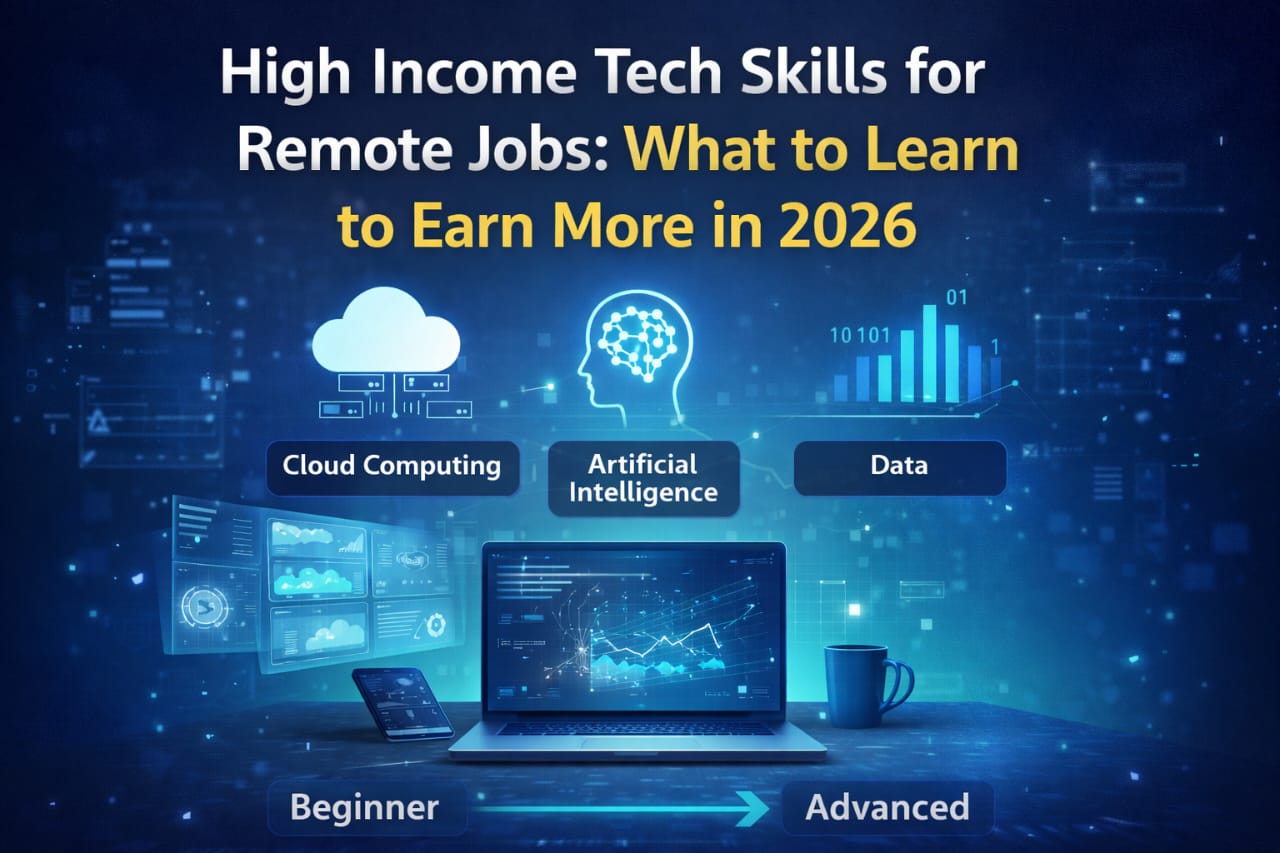
high income tech skills for remote jobs are no longer about learning everything in tech or chasing trends blindly. They are about understanding where real value exists in the modern digital economy and positioning yourself in areas that companies are already investing in heavily.
Quick Answer: The most valuable remote tech skills today include AI, cloud computing, cybersecurity, and data analytics because they directly impact business performance. These skills are high income because they help companies automate systems, protect infrastructure, and make better decisions at scale.
This guide focuses specifically on how these skills translate into real income, helping you understand not just what to learn, but how it turns into actual earning potential in remote work.
The biggest shift in remote work is simple but powerful. Companies are no longer hiring based on location, and they are no longer paying based on time. They are paying for outcomes, meaning your earning potential depends on what your skills actually produce in real business environments.
This is why some remote workers earn low, inconsistent income while others build stable, high-paying careers. The difference is not effort. It is understanding which skills create measurable impact and focusing on those areas long enough to become valuable.
If you approach this the right way, remote work becomes predictable. You are no longer guessing what to learn or where to go next. You are following a structure that aligns directly with demand.
While building these skills, one practical thing that often gets ignored is connectivity. Remote work depends heavily on stable internet access, and using a reliable global eSIM for remote work can help you stay consistent across platforms, especially when learning or working from different environments.
Why High Income Tech Skills Matter in Remote Work
The reason certain skills pay more is not because they are difficult, but because they are essential. Businesses rely on systems, data, and infrastructure to operate, and the people who manage these areas are directly tied to performance and revenue.
When a system fails, a company loses money. When data is inaccurate, decisions become risky. When security is weak, trust is broken. This is why roles connected to these systems are paid significantly more.
Remote work amplifies this effect. Companies are no longer limited to hiring locally, which means they are willing to pay more for the right skill regardless of where the person is based.
This creates a global market where value determines income. Once you understand this, the focus shifts from learning randomly to building skills that actually matter.
The Core Areas Driving High Income Remote Careers
Instead of focusing on individual tools, it is more effective to understand the core areas where high income opportunities exist. These are the foundations of modern digital systems, and demand for them continues to grow.
Artificial Intelligence and Automation
AI is transforming how businesses operate by reducing manual work and improving efficiency. From customer support automation to decision-making systems, AI is becoming part of everyday operations across industries.
What makes this area powerful is not just building AI systems, but understanding how to apply them in real-world situations. This is where most high-income opportunities exist.
Cloud Computing and Infrastructure
Every modern application runs on cloud infrastructure. Platforms like AWS, Azure, and Google Cloud support websites, applications, and entire business systems.
This makes cloud computing one of the most stable and scalable career paths in remote work. Companies depend on these systems to function, which is why they invest heavily in professionals who can manage them.
Data and Decision Systems
Data drives decisions in modern businesses. Without accurate insights, companies operate blindly, which increases risk and reduces performance.
Professionals who can collect, process, and interpret data provide direct value because they influence strategy, marketing, and growth.
Cybersecurity and System Protection
As digital systems grow, so do threats. Cybersecurity ensures that systems remain protected, data stays secure, and operations continue without disruption.
This is one of the most critical areas in remote work because trust and reliability are essential for any business operating online.
If you want a more practical breakdown of how these areas translate into actual learning paths, this guide explains it clearly: what to learn for high income tech skills.
How These Skills Connect (The Bigger Picture)
One mistake many people make is treating these skills as separate paths when in reality they are deeply connected. Modern systems rely on multiple layers working together, not isolated knowledge.
For example, a cloud system may store data, an AI model may process that data, and cybersecurity ensures everything remains protected. Understanding how these pieces fit together increases your overall value.
This is why high-income professionals often combine skills rather than rely on just one area. The ability to work across systems makes you more effective and harder to replace.
Even at an early stage, having awareness of this connection helps you make better decisions about what to learn and how to progress.
Choosing the Right Direction Early
Choosing a direction is where most people struggle, not because options are limited but because there are too many of them. Without structure, it becomes easy to jump between skills without making real progress.
The goal is not to pick the perfect path immediately. The goal is to choose one direction and go deep enough for it to become valuable before expanding.
If you enjoy systems and structure, cloud or cybersecurity is a strong fit. If you prefer analysis and insights, data is a natural path. If you are interested in automation and workflows, AI becomes a practical option.
What matters most is consistency. Progress comes from staying focused long enough to build real capability, not from constantly switching directions.
If you are starting from zero and need a clear step-by-step entry path, this guide breaks it down in a practical way: how to start remote work in the UK with no experience.
The Foundation Before Specialisation
Before moving into any high-income path, there is a simple foundation that makes everything easier. This stage is often overlooked, but it determines how quickly you progress later.
Understanding basic programming logic, how systems interact, and how data flows gives you the ability to learn faster and adapt to different roles over time.
This does not mean becoming an expert immediately. It means building enough understanding to avoid confusion when you move into more advanced areas.
Once this foundation is in place, choosing a specialization becomes easier, and your progress becomes more structured instead of random.
Salary Potential and How Value Translates Into Income
Once you understand the structure behind high income tech skills for remote jobs, the next step is seeing how that value translates into actual income. Remote work has completely changed how salaries are defined, shifting the focus away from location and toward measurable impact.
Instead of being limited by local opportunities, your income is now influenced by global demand. This means companies are willing to pay based on how critical your skill is to their operations, not where you are physically based.
In real terms, professionals working in AI, cloud computing, cybersecurity, and data are earning significantly more because their work directly supports infrastructure, decision-making, and long-term scalability.
Typical global salary ranges reflect this clearly:
- AI and Machine Learning: $90,000 – $180,000+
- Cloud Computing / DevOps: $80,000 – $160,000+
- Data Analytics / Engineering: $70,000 – $150,000+
- Cybersecurity: $85,000 – $170,000+
These numbers are not based on hype. They reflect how essential these roles are to modern businesses and how much companies rely on them to function effectively.
If you want to understand how these salaries translate into real roles and responsibilities, this guide explains it clearly: best high paying remote jobs UK.
How Skills Turn Into Real Income
Learning alone does not generate income. The real transition happens when you begin applying your knowledge to solve actual problems that businesses care about.
From experience, this is where most people get stuck. They consume information but delay action, which prevents them from building the proof needed to get hired.
Income starts when your work becomes visible and useful. Even simple projects can demonstrate your ability and create opportunities that theory alone cannot provide.
The most effective approach is to focus on execution:
- Build projects: Turn knowledge into something tangible
- Show your work: Make your process and results visible
- Stay consistent: Progress compounds over time
When you consistently apply what you learn, your skill becomes valuable, and that value is what companies are willing to pay for.
Certifications as Support, Not a Shortcut
Certifications can support your progress, but they are not a shortcut to high income. Their real purpose is to validate your knowledge, not replace practical ability.
In remote hiring, certifications help reduce uncertainty. They give employers confidence that you understand certain systems, especially when there is no direct interaction.
However, without real-world application, certifications lose their impact quickly. Employers still prioritise candidates who can demonstrate results through projects and experience.
The strongest combination is simple — build skills first, then use certifications to reinforce your credibility.
Why Positioning Matters More Than Skill Alone
Many people assume that learning a skill is enough, but in reality, positioning determines whether you get opportunities or get ignored.
Employers are not just looking for ability. They are looking for clarity. If they cannot quickly understand what you do and how you create value, they move on.
This is why having a clear direction matters. Instead of listing multiple skills, focus on one area and align your work around it.
When your positioning is clear, it becomes easier for companies to see where you fit, and this increases your chances of getting hired significantly.
Common Mistakes That Delay Progress
Even with access to the right information, many people struggle because of avoidable mistakes. These mistakes slow down progress and create unnecessary confusion.
One major issue is trying to learn everything at once. This spreads your focus and prevents you from becoming strong in any one area.
Another problem is staying in the learning phase for too long without taking action. Without application, there is no measurable growth.
- Switching between skills too frequently
- Focusing on theory without practical work
- Waiting too long before applying for roles
- Ignoring communication and presentation
A focused and consistent approach always produces better results. Depth creates value, and value leads to income.
Building a Sustainable Remote Work System
Remote work is not just about skills — it also depends on how well you manage your environment and routine. Without structure, productivity becomes inconsistent.
Your setup, tools, and ability to stay organised all influence your performance. Even small improvements in your workflow can lead to better results over time.
For professionals working across locations or maintaining flexible routines, using reliable travel support for remote professionals helps maintain stability while working.
At the same time, maintaining balance is important. Taking breaks and exploring your environment can improve focus and prevent burnout.
Platforms like activity and experience tools for remote workers can help create that balance while working remotely.
Conclusion
high income tech skills for remote jobs are not about doing more — they are about doing what matters. The market rewards people who can create impact, not those who collect knowledge without applying it.
When you focus on one direction, build real skills, and stay consistent, your progress becomes structured and predictable. Opportunities follow value, not effort alone.
The path is clear. Choose a skill, go deep, apply it consistently, and improve over time. That is how remote work becomes a reliable and scalable career path.