
Europemigrationguide.com is reader-supported. When you buy through links on our site, we may earn an affiliate commission.
How to get your first remote job without experience is no longer as complicated as most people believe, but it still requires a clear understanding of how remote hiring actually works in practice. Many beginners approach this process with the wrong expectations, assuming they need years of experience, multiple certifications, or advanced technical skills before they can even apply. That assumption creates hesitation, and hesitation is what delays progress more than anything else. The reality is different. Remote work is structured around output and reliability, not traditional job history, and once you understand that shift, the entire process becomes more practical and achievable.
Quick Answer: To get your first remote job without experience, focus on beginner-friendly roles like virtual assistant, data entry, or customer support, create simple proof of your skills, apply consistently on the right platforms, and communicate clearly in your applications. Employers value reliability and clarity more than experience.
If you want to understand how to get your first remote job without experience step by step, this guide shows you exactly what to do and how to stand out as a beginner.
Instead of focusing on what you do not have, the smarter approach is to understand what employers are actually evaluating when they review applications. Remote companies operate in environments where supervision is minimal, communication is digital, and results matter more than effort. This means they are not asking whether you have worked in an office before—they are asking whether you can complete tasks independently, follow instructions without confusion, and deliver consistently over time. When you align your approach with this expectation, you stop competing on experience and start competing on clarity and execution, which is where beginners can realistically win.
If you have already explored different roles in best remote jobs for beginners no experience, then the next step is understanding how to position yourself to actually get hired. Knowing the roles alone is not enough, because many people are applying for the same opportunities without getting responses. The difference comes from how you present yourself, how you structure your application, and how clearly you demonstrate your ability to handle the work. This is the stage where most beginners struggle, and it is also where small improvements create the biggest results.
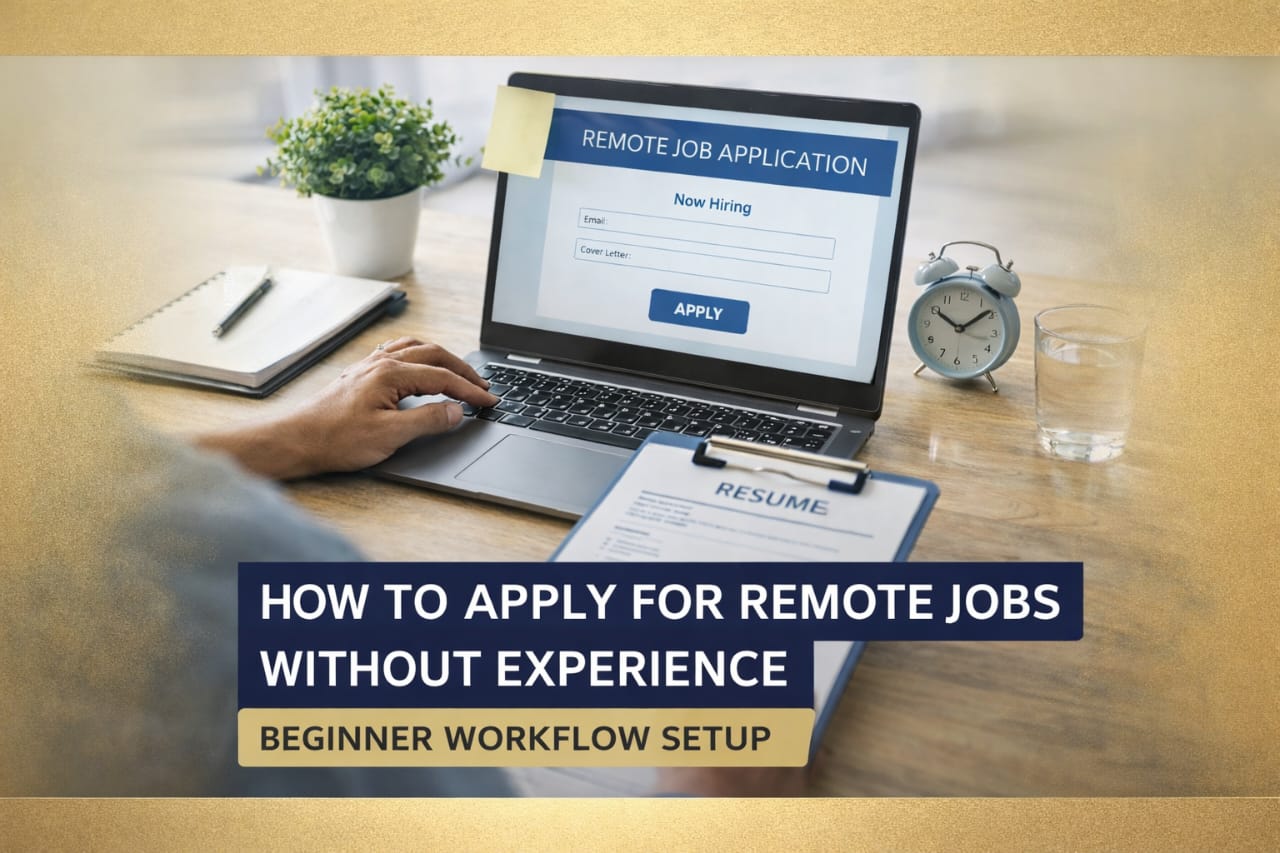
Remote Hiring Has Shifted — And That Works in Your Favour
There has been a clear shift in how companies approach hiring, especially in remote environments where teams are distributed across different countries and time zones. Employers can no longer rely on traditional signals like location, university background, or office experience because those factors are no longer consistent across global applicants. Instead, they focus on what can be measured quickly and reliably, which is your ability to deliver results. This change has opened the door for beginners in a way that did not exist before, but only for those who understand how to adapt to it.
What this means in practical terms is that employers are looking for simple but critical indicators. They want to see whether you can follow instructions without needing constant clarification, whether you can complete tasks within a given timeframe, and whether your communication is clear enough to avoid misunderstandings. These are not advanced requirements, but they are non-negotiable. If you can demonstrate these qualities, even at a basic level, you already meet the expectations for many entry-level remote roles, regardless of your background.
What Employers Actually Pay Attention To
When employers review applications, they are not reading every word in detail—they are scanning for signals that reduce risk. A beginner with no experience is not a problem for them. An unclear applicant is. This is why most applications fail before they are even considered properly. They lack structure, clarity, and proof, which makes it difficult for the employer to understand what the applicant is capable of doing. Fixing this is not complicated, but it requires intention.
There are three key things that consistently stand out in strong beginner applications. The first is reliability, which can be demonstrated through simple things like structured responses, clear formatting, and attention to detail. The second is communication, where clarity matters more than complexity because employers want to understand you quickly. The third is evidence, which does not mean professional experience, but rather small examples of work that show you can perform tasks. When these three elements are present, your application immediately becomes stronger than most.
Step 1: Start With Roles That Match Your Level
Choosing the right role is one of the most important decisions you will make at the beginning. Many beginners apply for positions that appear simple but actually require prior experience, which leads to repeated rejection and frustration. This creates the impression that remote work is too competitive, when in reality the issue is misalignment. Starting with roles that are designed for beginners removes this problem completely and allows you to build momentum early.
Roles such as virtual assistance, customer support, data entry, and basic content writing exist because companies need consistent support for ongoing tasks. These roles are not built for specialists—they are built for people who can follow systems, stay organised, and deliver reliably. That is why they are accessible to beginners. They provide a structured starting point where you can learn while working, which is far more effective than waiting to feel “ready.”
Step 2: Create Proof Instead of Waiting for Experience
One of the biggest misconceptions beginners have is believing they need a job before they can prove their ability. This mindset slows everything down because it places control in the hands of employers instead of yourself. A more effective approach is to create simple examples of work that demonstrate your capability before you even apply. This shifts your position completely because you are no longer asking for an opportunity—you are showing that you are already prepared to contribute.
These examples do not need to be complex. A well-organised spreadsheet, a clearly written article, or a structured response to a customer scenario can all serve as proof. What matters is clarity and effort. When you include these in your application, you remove doubt from the employer’s perspective. They can see what you can do instead of trying to guess, and that alone can significantly increase your chances of getting a response.
Step 3: Build a Setup That Supports Consistency
Remote work depends heavily on consistency, and consistency is influenced by your environment more than most beginners realise. If your setup is unstable, your performance becomes unpredictable, and that is something employers avoid. You do not need an expensive workspace, but you do need a reliable one where you can focus, communicate, and complete tasks without interruptions.
This includes having a quiet space, a stable internet connection, and access to basic tools that function properly. Even small issues, such as inconsistent connectivity, can affect your ability to deliver work on time or attend meetings. That is why many remote workers rely on reliable mobile internet solutions for remote work to maintain stable access across different environments. It is a small adjustment, but it directly impacts your ability to perform consistently.
Step 4: Keep Your Resume Simple and Clear
Your resume is not meant to impress—it is meant to communicate quickly and clearly. Most beginner resumes fail because they try to compensate for lack of experience with unnecessary detail, which makes them harder to read. Employers do not need long explanations. They need to understand what you can do within seconds.
A simple structure works best. Start with a short summary that explains your capability, list your key skills in a way that is easy to scan, and include your project examples as proof. This approach aligns with how remote hiring works because it focuses on present ability rather than past experience. When your resume is clear, structured, and supported by examples, it becomes much easier for an employer to take you seriously as a beginner.
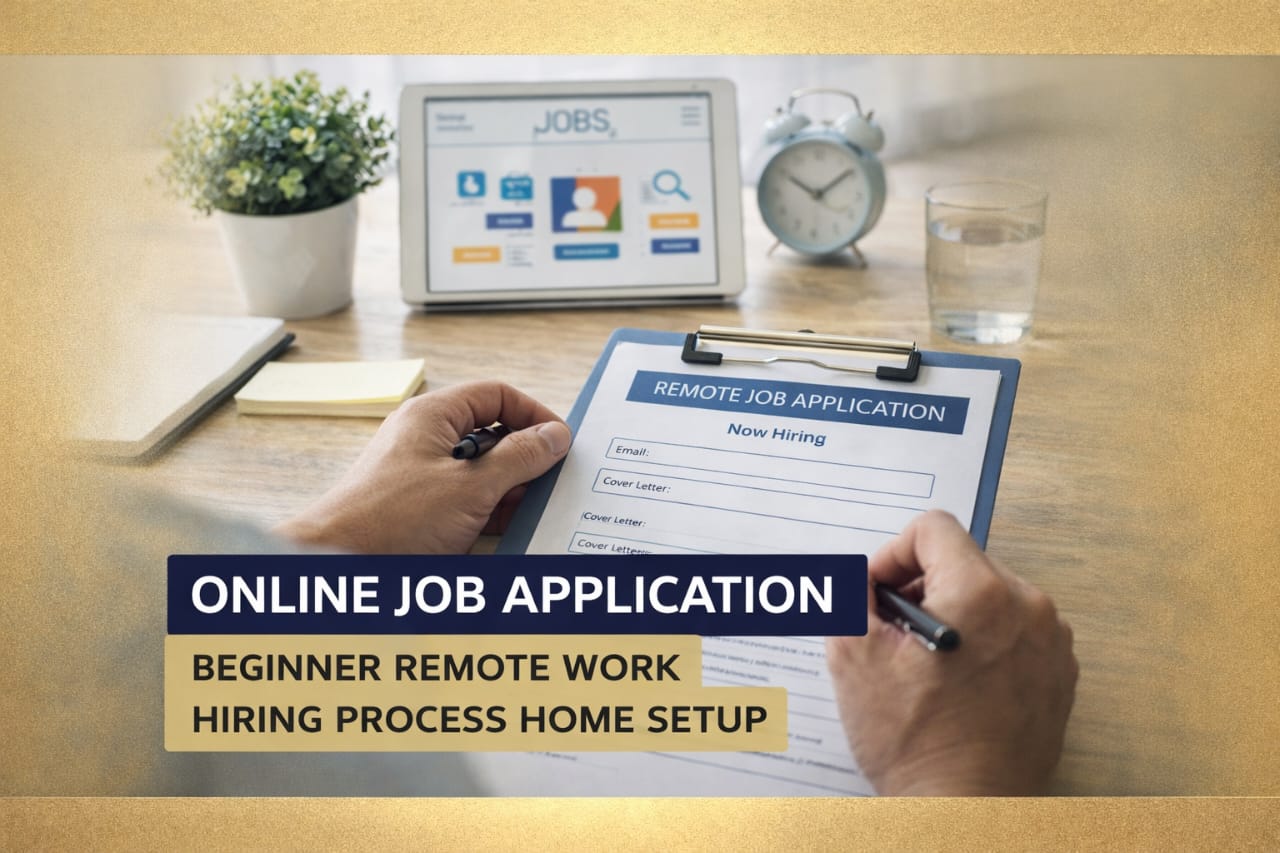
Where to Find Your First Remote Job Without Experience
Once your foundation is ready, the next step is knowing exactly where to look for opportunities without wasting time or energy. Many beginners struggle at this stage not because jobs are unavailable, but because they approach the search without a clear strategy and end up applying randomly. Remote job hunting is not about sending as many applications as possible—it is about focusing on platforms that are actually beginner-friendly and understanding how they work.
There are three main paths that consistently produce results, and each one plays a different role depending on how you approach it. When you understand these paths, your job search becomes more structured, more focused, and far less frustrating. Instead of guessing what might work, you begin to follow a process that improves your chances over time.
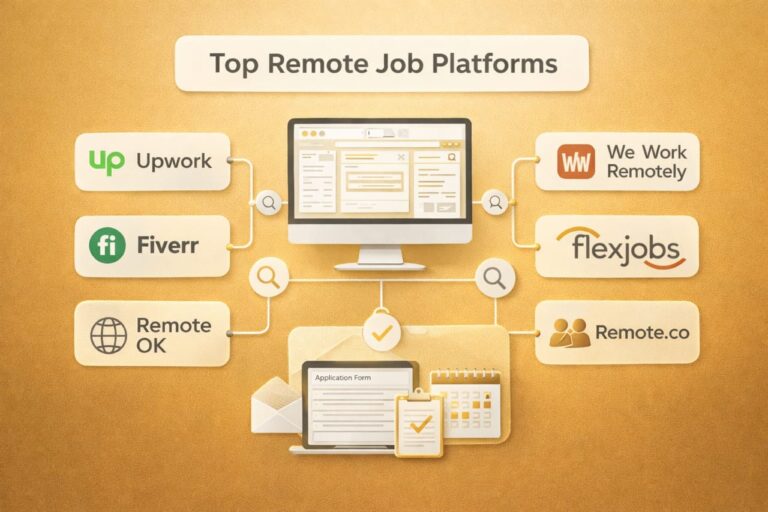
Freelance platforms are often the easiest starting point because they allow you to begin without formal experience. You are not waiting to be selected—you are presenting a service that solves a problem. Even small jobs help you build reviews, proof, and confidence. Over time, this creates momentum, and that momentum is what opens the door to better-paying opportunities.
Remote job boards provide a more structured path for beginners who prefer working within a company system. These platforms list roles such as customer support, administrative assistance, and entry-level operations. The advantage here is stability, because you are working within a defined structure instead of constantly searching for new work.
Direct outreach is often ignored, but it can produce faster results when done correctly. Many small businesses need help but do not always advertise roles. Sending a clear and simple message offering your help can open opportunities with less competition, especially when your message is focused and practical.
How to Apply Without Experience and Still Get Results
Applying without experience is not about lowering your chances—it is about presenting your value clearly. Most beginners focus too much on what they lack, which weakens their application. Employers are not expecting perfection. What they want is clarity, reliability, and someone who understands the task.
Your application should be simple, direct, and easy to read. Long messages often get ignored because they take too much effort to process. Instead, focus on what you can do, how it helps, and why you are a good fit. Even personal projects or practice work can serve as proof when presented correctly.
A strong beginner application includes a short introduction, a clear statement of your skill, and a simple example of your work. This structure works because it respects the employer’s time while still showing your ability. When your message is clear and focused, it immediately improves your chances of getting a response.
Consistency is what turns effort into results. Applying occasionally will not work. You need to apply regularly, refine your approach, and improve over time. As your applications improve, your confidence increases and your results follow naturally.
Understanding Beginner Income and Growth
At the beginning, income may feel low, but remote work is not about instant results—it is about building a foundation that grows over time. Many beginners focus only on how much they earn at the start instead of recognising that they are building skills and experience that will determine their future income.
Your first role is not about earning big—it is about gaining real experience, understanding how remote work operates, and improving your ability to deliver results. Once you go through this stage, your growth becomes faster and more predictable.
As your skills develop and your positioning improves, your income increases naturally. What matters most is consistency and continuous improvement. Small progress made consistently leads to significant long-term results.
Role |
Beginner Monthly Range |
Growth Potential |
|---|---|---|
Virtual Assistant |
$300 – $800 |
High |
Data Entry |
$200 – $600 |
Low–Medium |
Customer Support |
$400 – $900 |
Medium |
AI Data Labelling |
$300 – $700 |
Medium |
Freelance Writing |
$200 – $1000+ |
Very High |
These figures are only a starting point. What determines your growth is how consistently you improve your skills and how well you position yourself over time.
Staying Consistent Without Burning Out
Consistency is one of the biggest challenges beginners face, especially when results are slow. Without structure, it becomes easy to lose focus or feel discouraged. This is why having a simple and repeatable routine is essential—it removes uncertainty and helps you stay on track.
When your day is structured, your productivity becomes more stable and predictable. You know when to apply, when to work, and when to rest. This reduces stress and allows you to focus on execution instead of constantly deciding what to do next.
For beginners working across different environments, using reliable remote work protection and travel support helps maintain stability and ensures your workflow is not disrupted by external issues.
Maintaining balance is also important. Taking breaks, changing your environment, and refreshing your mind improves long-term productivity. Platforms like activity and lifestyle platforms for remote workers help you maintain that balance while staying productive.
Remote work is not about working endlessly—it is about building a system that you can sustain long term without burnout.
Frequently Asked Questions
Can I get a remote job without experience?
Yes, many beginner roles focus on basic skills like communication, organisation, and reliability rather than formal experience.
What jobs are easiest to start with?
Virtual assistant, customer support, data entry, and writing are common starting points for beginners.
How long does it take to get hired?
This depends on your consistency and approach. The more focused and regular your applications are, the faster your chances improve.
Do I need to pay to get a job?
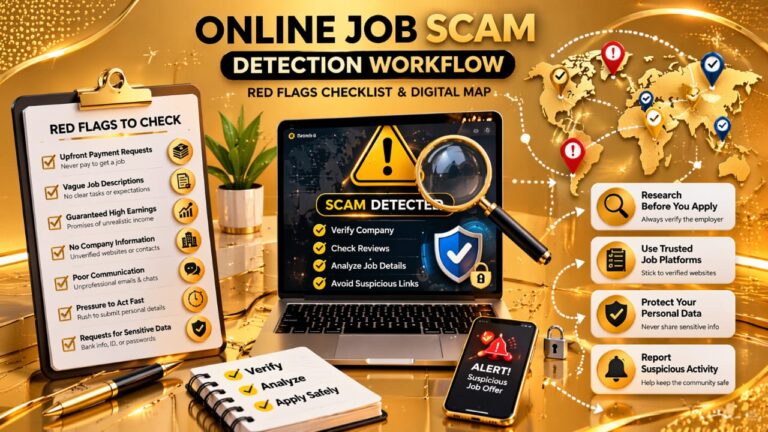
No legitimate remote job requires payment. Always avoid opportunities that ask for money upfront.
What should I focus on first?
Focus on building simple skills, creating sample work, and applying consistently.
Conclusion
How to get your first remote job without experience is about taking consistent and structured action. Once you understand where to look, how to apply, and how to stay focused, the process becomes easier and more predictable.
You do not need to be perfect to start. You need to begin, improve, and stay consistent. Over time, that effort turns into real opportunities and long-term growth.