
Europemigrationguide.com is reader-supported. When you buy through links on our site, we may earn an affiliate commission.
Remote job scams to avoid have become one of the biggest hidden challenges for beginners trying to start working online in 2026. While remote work opportunities have expanded globally, so has the number of fake job offers designed to exploit people who are just starting out. The problem is not just that scams exist—it is that they now look real, structured, and convincing enough to pass as legitimate opportunities.
Quick Answer: Remote job scams can be identified by warning signs such as upfront payment requests, fake recruiter emails, chat-only interviews, unrealistic salaries, and pressure tactics. Legitimate companies never ask for money and always follow a structured hiring process.
At the beginning, most people think the biggest challenge is getting hired. In reality, the bigger challenge is knowing which opportunities to trust. Many beginners apply to multiple jobs, receive responses, and assume they are making progress—only to later realise they were dealing with scammers.
This is where awareness becomes important. Once you understand how these scams are designed, you stop reacting emotionally to offers and start evaluating them logically. That shift alone can save you from costly mistakes.

Why Remote Job Scams Are Increasing in 2026
The rise in remote job scams is directly linked to how remote work operates today. Hiring is no longer limited by location, communication happens online, and many companies use flexible or asynchronous processes. While this creates opportunities, it also creates gaps that scammers can exploit.
Anyone can now create a professional-looking job listing, design a fake company page, or send emails that appear legitimate. For someone new to remote work, these details can be difficult to verify quickly.
This is why beginners are often targeted. You are still learning how the system works, which makes it easier for scammers to blend in with real employers. Without clear direction, it becomes difficult to separate real opportunities from fake ones.
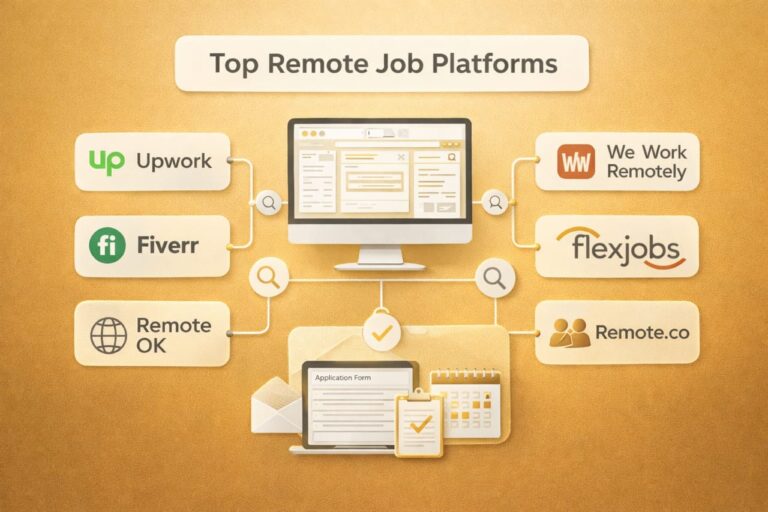
If you are still exploring legitimate platforms where real opportunities exist, this guide gives you a clear starting point: best websites to find remote jobs for beginners.
Critical Warning Signs (Red Flags You Should Never Ignore)
The fastest way to protect yourself is by recognising patterns. Most scams follow predictable structures, even when they appear different. Once you understand these patterns, you can identify problems early before they escalate.
Upfront Payment Requests
This is the most important red flag. Legitimate companies will never ask you to pay for training, software, equipment, or onboarding. The moment money is involved before work begins, you should stop immediately.
Some scams try to make this look convincing by promising refunds or claiming it is part of a formal process. Others send fake payments or cheques and ask you to transfer a portion back. These tactics are designed to build trust before taking advantage of you.
Unprofessional or Suspicious Communication
How a recruiter communicates tells you a lot. Messages with poor grammar, vague instructions, or generic greetings are warning signs. Another major red flag is the email domain. Legitimate companies use official domains, not free email services.
If communication feels rushed, unclear, or inconsistent, it is worth questioning before moving forward.
Chat-Only Interviews
One of the most common modern scams involves chat-based interviews conducted through Telegram, WhatsApp, or similar apps. While messaging can be part of communication, a full hiring process without a proper video or structured interview is highly suspicious.
Real companies follow a process. There is usually a clear interview stage, and communication happens through professional platforms.
Unrealistic Salary Offers
High pay for simple, entry-level tasks is one of the easiest ways scammers attract attention. Offers that promise large income for minimal effort should always be questioned.
Understanding what real beginner roles look like helps you avoid this trap: best remote jobs for beginners no experience.
Urgency and Pressure Tactics
Scammers rely on urgency to stop you from thinking clearly. They may say the job will be taken quickly or that you need to act immediately to secure your position.
Legitimate employers do not rush candidates into decisions. They give you time to review details, ask questions, and understand the role.
Common Remote Job Scams You Should Know
Beyond general warning signs, there are specific scam formats that appear repeatedly. Knowing these makes it easier to recognise them instantly.
Fake Check Scams
You are hired quickly and sent a cheque to purchase work equipment. After depositing it, you are asked to send part of the money back. Later, the cheque fails, and you are left responsible for the loss.
Reshipping or Money Mule Schemes
You are asked to receive packages or process payments on behalf of a company. While it may seem like simple work, it often involves illegal activity, putting you at serious risk.
Phishing Job Listings
These scams focus on collecting your personal information. They may ask for banking details, identification, or sensitive data under the guise of a job application.
Ghost Jobs
Some job listings exist only to collect data or build applicant databases without any intention of hiring. While not always directly harmful, they waste your time and create confusion.
One Habit That Protects You From Most Scams
The simplest and most effective habit is verification. Before taking any action, pause and confirm the legitimacy of the opportunity. Check the company’s official website, verify the recruiter’s identity, and compare the job listing with trusted sources.
Staying connected and being able to verify information quickly can make a difference. Many remote workers rely on reliable global internet access for secure job verification to cross-check details and avoid mistakes.
This habit may seem small, but it changes how you approach opportunities. Instead of reacting quickly, you make informed decisions.
The Reality Beginners Must Accept
Remote job scams are part of the online work environment. Avoiding them is not about fear—it is about awareness. The more you understand how they work, the easier it becomes to identify and avoid them.
Once you develop this awareness, your confidence improves. You stop second-guessing every opportunity and start focusing only on those that are real and worth your time.
This is the point where your job search becomes more effective, more focused, and far less risky.
How to Verify a Remote Job Offer Before You Accept It
Understanding the red flags is only part of the process. Verifying opportunities properly is what actually protects you. Many beginners make mistakes at this stage, not because they ignore scams, but because they do not have a clear system for checking legitimacy. Verification is not complicated, but it requires attention to detail and a structured approach.
Instead of relying on how convincing a job looks, you rely on evidence. This means checking sources, confirming identities, and making sure every part of the opportunity aligns with how real companies operate. That shift from assumption to verification is what protects you from costly mistakes.
Check the Company’s Official Presence
Start by searching for the company’s official website and reviewing its structure carefully. A legitimate company will have a clear online presence, including a professional website, contact details, and consistent branding across platforms. If you cannot find these, that is already a warning sign.
Next, confirm if the job you applied for exists on their official careers page. Many scammers copy real company names but create fake listings that are not published anywhere else. This small check alone can save you from falling into a trap.
Verify the Recruiter’s Identity
Always check who is contacting you. A real recruiter will usually have a professional profile with history, connections, and activity. If the account looks new, empty, or disconnected from the company, you should be cautious.
Also look at the email address being used. Official recruiters use company domains, not free email services. This detail is often overlooked, but it is one of the easiest ways to identify fake communication.
Analyse the Hiring Process
A legitimate hiring process follows a clear structure—application, screening, interview, and then offer. If everything happens too quickly or skips steps, it is not normal. Real companies take time to evaluate candidates properly.
If you want to understand what a structured application process should look like, this guide explains it clearly: how to apply for remote jobs without experience.
How Real Remote Hiring Processes Actually Work
Understanding how legitimate hiring works gives you a major advantage because it allows you to recognise anything that feels out of place. When you know the structure, scams become easier to spot.
A real process usually begins with reviewing your application, followed by a screening stage where your basic fit is evaluated. After that, there is at least one structured interview, often conducted through video or a professional meeting platform.
Some roles may include a short assessment task. This is normal and helps employers evaluate how you work. However, these tasks are always reasonable and never require payment or personal investment.
The final stage is a formal offer that clearly outlines responsibilities, expectations, and payment structure. There is no pressure, no urgency, and no hidden conditions.
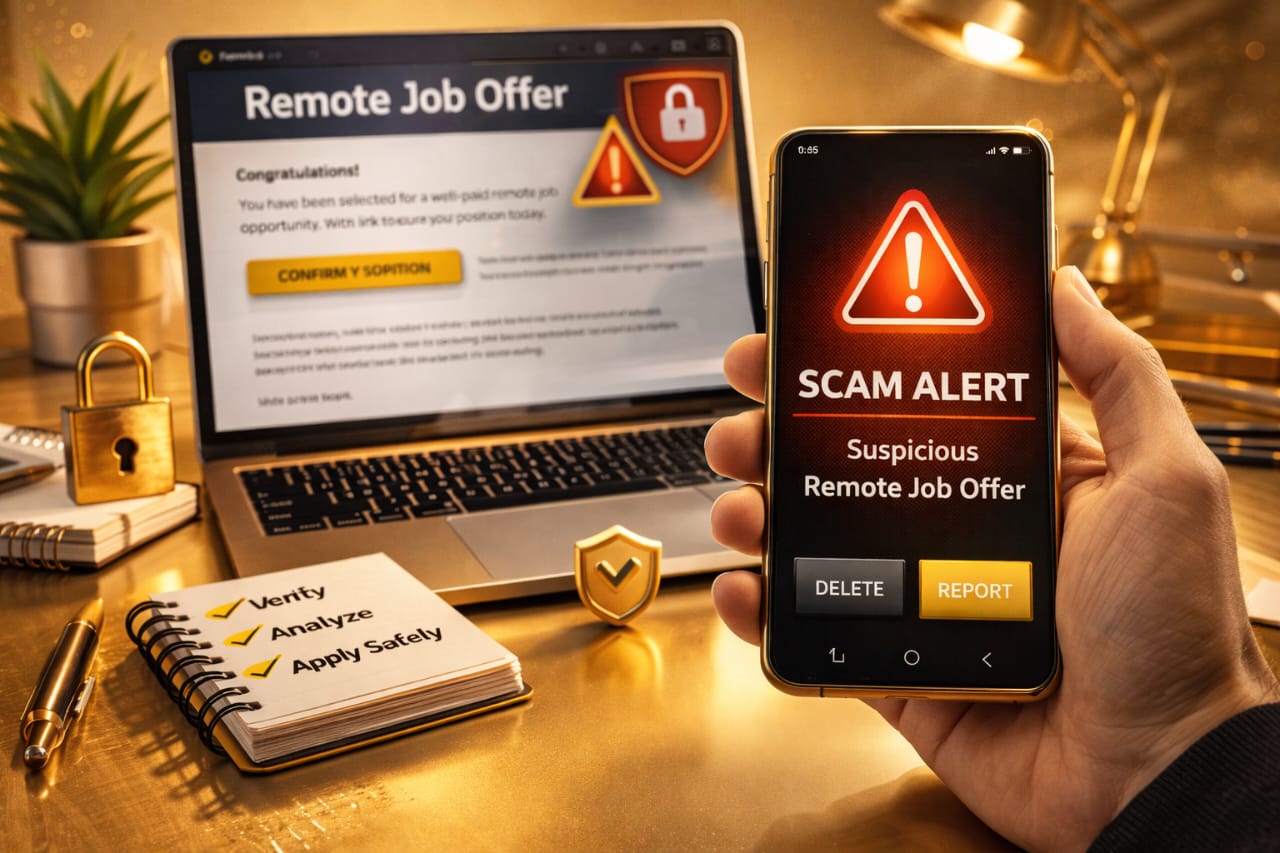
A Simple System to Stay Safe Every Time
Instead of guessing, you can follow a repeatable system whenever you encounter a job opportunity. This removes uncertainty and makes your decisions more structured.
- Step 1: Confirm the company exists and has a real website
- Step 2: Check if the job is listed on official channels
- Step 3: Verify the recruiter’s identity and communication method
- Step 4: Review the hiring process for structure and consistency
- Step 5: Avoid any request for payment or sensitive information
Following this system consistently reduces risk and helps you focus only on real opportunities.
How Scammers Manipulate People (And How to Avoid It)
Scammers rely heavily on psychology, not just technology. One of their main tactics is excitement—making the opportunity feel like a breakthrough moment so you stop questioning details.
They also use urgency to push quick decisions. By creating pressure, they reduce the time you have to think or verify information. This is why slowing down is one of the most powerful things you can do.
Another tactic is authority. Fake recruiters use logos, structured messages, and professional language to appear credible. Without verification, this can be very convincing.
The solution is simple—pause, verify, and never rush. That habit alone protects you more than anything else.
Protecting Your Workflow While Job Hunting
Your environment also plays a role in how safely and effectively you operate. A stable setup allows you to verify opportunities, attend interviews, and communicate without disruption.
Many remote workers use secure remote work protection and stability tools to maintain consistency while working or applying across different environments.
At the same time, maintaining balance is important. Job searching can become overwhelming, which affects your judgment. Platforms like trusted activity and lifestyle platforms help you stay refreshed and focused during the process.
What to Do If a Job Feels Suspicious
If something feels off, do not ignore it. Stop communication immediately and avoid sharing additional information until you verify everything.
Check the company independently, compare details, and if necessary, contact them directly through official channels. If the opportunity is fake, report it to help others avoid the same issue.
If you want to understand how real interview communication should feel and look, this guide explains it clearly: how to pass a remote job interview.
Frequently Asked Questions (FAQ)
How can I confidently identify a remote job scam?
You identify scams by looking for patterns such as payment requests, lack of structured interviews, unofficial communication channels, and unrealistic promises. When multiple red flags appear together, it is almost always a scam.
Is it normal to get hired quickly in remote jobs?
No. While some processes move faster than traditional jobs, legitimate companies still follow structured steps. Instant hiring without evaluation is a strong warning sign.
What is the safest way to apply for remote jobs?
The safest approach is to use trusted platforms, verify every opportunity, and follow structured application methods. Avoid rushing into offers without proper checks.
Can scammers use real company names?
Yes, and this is very common. That is why you must always verify job listings directly on official company websites instead of relying on external messages.
How do I build confidence while avoiding scams?
Confidence comes from understanding the system. Once you know how real hiring works and how scams operate, you stop guessing and start making informed decisions.
Final Thoughts
Remote job scams to avoid are part of the online work space, but they do not have to slow you down. Once you understand the patterns, verify properly, and follow a structured approach, your job search becomes safer and more effective.
You do not need to fear remote work—you just need to approach it with awareness. With the right mindset and system, you can focus on real opportunities and build your remote career with confidence.