
Europemigrationguide.com is reader-supported. When you buy through links on our site, we may earn an affiliate commission.
Best websites to find remote jobs for beginners have become one of the most important starting points for anyone trying to work online in 2026. With thousands of platforms available, the real challenge is not finding websites—it is knowing which ones actually work for beginners and how to use them correctly without wasting time.
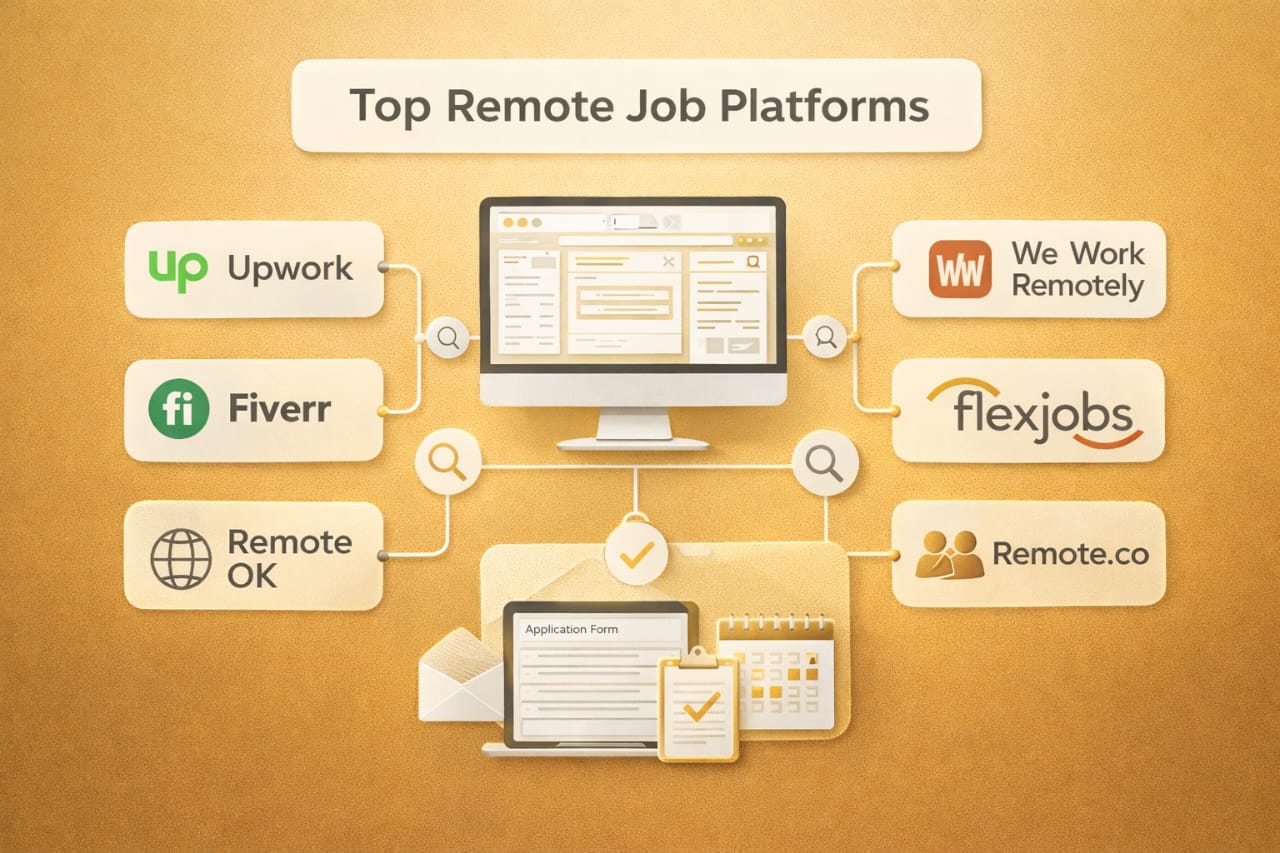
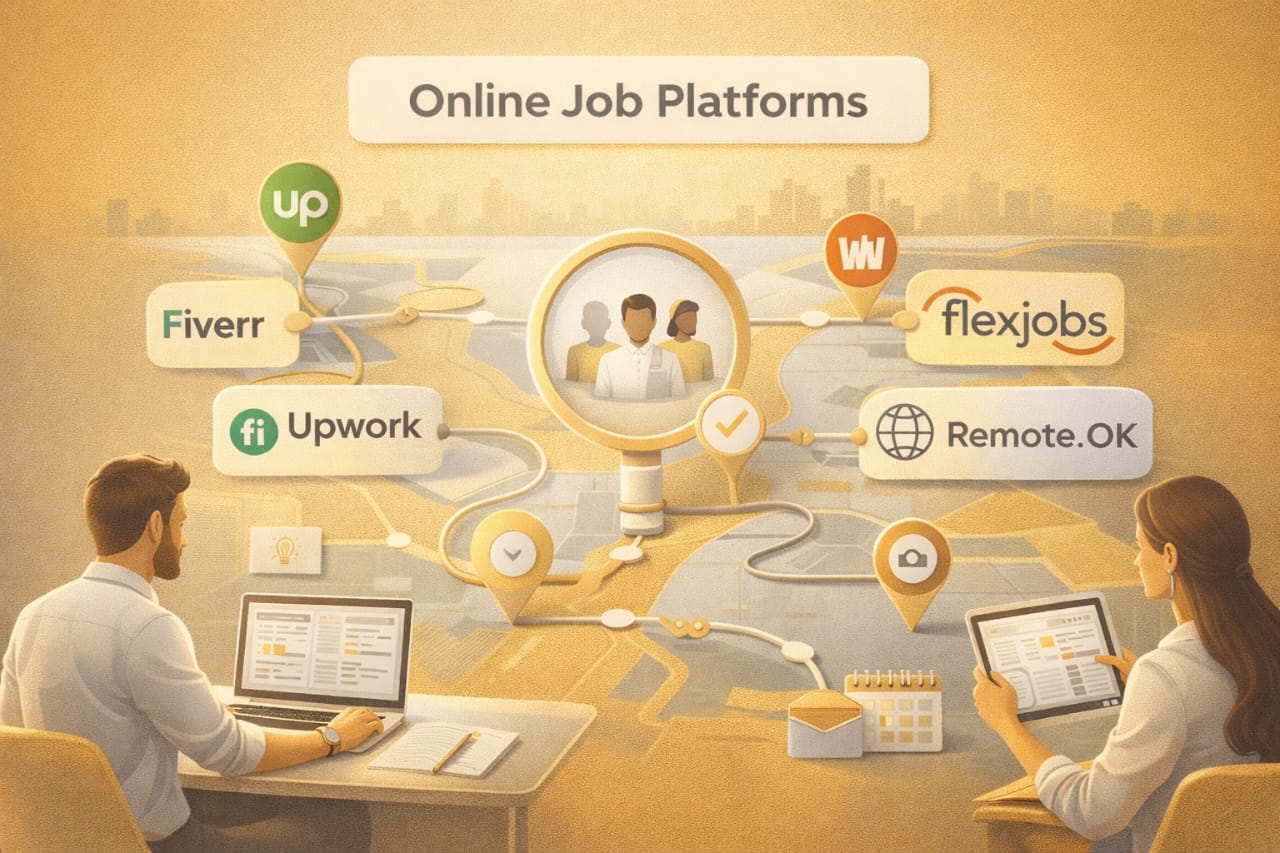
Quick Answer: The best websites to find remote jobs for beginners include Upwork, Fiverr, Remote OK, FlexJobs, We Work Remotely, and Remote.co. These platforms offer entry-level opportunities, structured job listings, and systems that allow beginners to start earning without prior experience.
If you want to understand how to use the best websites to find remote jobs for beginners and actually get results, this guide explains how each platform works and how to approach them step by step.
At the beginning, most people approach remote job platforms the wrong way. They sign up on multiple websites, apply randomly, and expect quick results. When nothing happens, it feels like remote work is difficult or unrealistic. In reality, the issue is not the platforms—it is the lack of structure in how they are used.
I’ve seen people try five different platforms at once and get no results, simply because they never stayed consistent on one long enough to understand how it works.
What many beginners do not realise is that remote job platforms are not just “places to find jobs.” They are systems with their own rules, expectations, and patterns. If you do not understand how those systems work, it becomes difficult to get results, no matter how many times you apply.
Each platform operates differently. Some are built for freelance work where you offer services, while others are structured job boards where you apply for roles within companies. Understanding this difference is what allows beginners to stop guessing and start making real progress.
Once you begin to see platforms as structured environments instead of random opportunities, your approach changes. You stop applying blindly and start positioning yourself in a way that aligns with how each platform works. That shift alone can significantly improve your chances.
Understanding the Types of Remote Job Platforms
Before choosing any platform, it is important to understand that remote job websites are not all the same. They are designed for different purposes, and using the wrong type can slow down your progress significantly.
The first category is freelance platforms. These include platforms like Upwork and Fiverr, where you offer services instead of applying for jobs in the traditional sense. Clients come to you based on your profile, or you send proposals for specific tasks. This model is highly flexible and allows beginners to start quickly, but it also requires consistency and patience to build momentum.
What makes freelance platforms powerful is that they remove the barrier of experience. You are not being judged based on your past job history—you are being evaluated based on how clearly you present your value. This is why beginners who understand positioning often succeed faster than those who simply rely on qualifications.
The second category is remote job boards. Platforms like Remote OK, We Work Remotely, and Remote.co fall into this group. These websites list structured roles from companies, meaning you apply just like a traditional job. The advantage here is stability, but the competition can be higher, which makes clarity in your application very important.
Unlike freelance platforms, job boards require stronger alignment. Employers are not just looking for someone who can do the job—they are looking for someone who fits into their workflow. Because of this, your applications need to be more targeted and structured.
There are also hybrid platforms like FlexJobs, which combine curated listings with added verification to reduce scams. While some of these platforms require a subscription, they often provide higher-quality opportunities, especially for beginners who want a safer starting point.
For many beginners, this category becomes valuable after initial experience. It provides a more controlled environment where you can focus on legitimate opportunities instead of filtering through low-quality listings.
If you are still unsure which roles fit your current level, this guide explains the most realistic options available: best remote jobs for beginners no experience.
Top Remote Job Websites for Beginners (Explained Properly)
Choosing the right platform is not about picking the most popular one—it is about understanding how each platform works and how it fits your current level. When used correctly, these platforms become entry points into real opportunities rather than just websites you browse without results.
Upwork is one of the most effective platforms for beginners who want to build long-term remote careers. It operates on a proposal system, where you apply for jobs by submitting tailored responses. While competition exists, beginners can still succeed by focusing on simple roles such as data entry, virtual assistance, and content writing.
What many people overlook is that Upwork rewards consistency more than perfection. Sending clear, focused proposals consistently over time is what builds traction. Once you secure your first few jobs, the platform begins to work in your favour through reviews and visibility.
Fiverr works differently. Instead of applying for jobs, you create “gigs” that clients can purchase directly. This makes it easier for beginners to start without writing proposals. However, success depends on how clearly you present your service.
A common mistake on Fiverr is trying to offer too many services at once. A focused gig that solves one clear problem usually performs better than a broad offer that lacks direction. Clarity is what attracts clients.
Remote OK is a job board focused on tech and startup roles, but it also includes entry-level opportunities in support and operations. The key advantage here is visibility—you can find global opportunities that are not limited by location.
We Work Remotely is one of the largest remote job communities, offering roles across different industries. It is particularly useful for beginners who want structured positions instead of freelance work.
Remote.co focuses on fully remote roles and often includes beginner-friendly categories such as customer support and administrative work. This makes it easier to filter opportunities based on your current level.
FlexJobs stands out because of its verification process. While it requires a subscription, it reduces the risk of scams and low-quality listings. For beginners who want a safer and more structured experience, this can be a valuable option.
If you want to understand how to approach these platforms correctly and increase your chances of getting responses, this guide explains the process in detail: how to apply for remote jobs without experience.
Platform Comparison for Beginners
Platform |
Best For |
How It Works |
|---|---|---|
Upwork |
Long-term freelance work |
Submit proposals to clients |
Fiverr |
Quick beginner gigs |
Create services for clients to buy |
Remote OK |
Startup & remote roles |
Apply to listed jobs |
We Work Remotely |
Structured remote jobs |
Apply directly to companies |
Remote.co |
Entry-level remote roles |
Filtered job listings |
FlexJobs |
Verified opportunities |
Curated job board (subscription) |
One Thing That Determines Your Success on These Platforms
Many beginners believe that signing up on multiple platforms increases their chances of success. In reality, this often leads to scattered effort and poor results. The most effective approach is to choose one or two platforms and focus on understanding how they work deeply.
Depth always beats spread. When you understand how one platform works—how clients think, how listings are structured, and how applications are evaluated—you become more effective over time.
Consistency matters more than quantity. Sending better applications, improving your profile, and learning how to position your skills will produce better results than applying randomly across multiple websites.
Your setup also plays a role. Reliable internet access and the ability to stay connected across platforms can affect your consistency. Many remote workers rely on stable global connectivity for remote job searching to maintain smooth communication and avoid disruptions during applications or interviews.
Once you understand how these platforms work and apply a structured approach, they stop feeling confusing and start becoming predictable systems that you can use to your advantage. At that point, you are no longer just searching for jobs—you are operating within a system that produces results.
How to Actually Use These Websites to Get Results
Knowing the best websites to find remote jobs for beginners is only the first step. What actually determines your success is how you use these platforms over time. Many beginners sign up, apply a few times, and stop when they do not get immediate results. This is where most people fail—not because the platforms do not work, but because they do not understand how to operate within them consistently.
Each platform rewards behaviour. Freelance platforms reward consistency and visibility, while job boards reward timing and clarity. If you approach them casually, you get casual results. If you approach them with structure, your results begin to improve steadily.
The first thing you need is focus. Instead of jumping between multiple platforms every day, choose one or two and commit to understanding how they work deeply. Learn how jobs are posted, how clients describe what they need, and how successful applicants position themselves. This level of awareness gives you an advantage that most beginners never develop.
Another important factor is consistency. Applying once or twice is not enough. You need to show up regularly, refine your approach, and improve your applications over time. The people who succeed are not always the most skilled—they are the most consistent.
If you want to understand how beginners move from applying randomly to actually getting hired, this guide breaks the full process down clearly: how to get your first remote job without experience.
How to Choose the Right Platform Based on Your Situation
Not every platform will work for you immediately, and this is where many beginners get confused. Choosing the right platform depends on your current situation, your skill level, and how you prefer to work.
If you are starting with no experience and want quick entry, freelance platforms like Upwork and Fiverr are often the best choice. They allow you to start small, build proof, and improve gradually without needing formal job history. This makes them ideal for beginners who are still learning.
If you prefer structure and want something closer to traditional employment, remote job boards like We Work Remotely or Remote OK are more suitable. These platforms provide defined roles with expectations, which can be easier to follow if you prefer stability.
For those who want a safer environment with less risk of scams, curated platforms like FlexJobs provide filtered opportunities. While they may require a subscription, they reduce uncertainty and allow you to focus on legitimate roles.
The key is alignment. When your choice of platform matches your current level and expectations, your effort becomes more effective. Without that alignment, even the best platforms will feel difficult to use.
Common Mistakes Beginners Make on Remote Job Platforms
One of the biggest reasons beginners struggle is not because they lack ability, but because they repeat common mistakes that reduce their chances without realising it. These mistakes are subtle, but they have a strong impact on your results.
The first mistake is applying without direction. Many beginners apply for multiple roles across different categories without focusing on one clear path. This leads to weak applications because there is no clear positioning. Employers prefer candidates who understand exactly what they are applying for.
Another common mistake is poor presentation. Even if you have the ability to do the work, a poorly written profile or unclear application makes it difficult for employers to trust you. Clarity is more important than trying to impress with complex language.
Many beginners also underestimate the importance of proof. Saying you can do something is not enough. Showing simple examples—even if they are self-created—makes a significant difference in how you are perceived.
Inconsistency is another major issue. Applying for a few days and then stopping breaks momentum. Remote work rewards consistency, and without it, progress becomes slow and unpredictable.
Recognising and avoiding these mistakes can improve your results immediately because you are no longer working against the system.
How to Build a Simple System That Works Long-Term
Success on remote job platforms is not random—it comes from having a simple system that you follow consistently. Without a system, it is easy to feel overwhelmed and lose direction.
A basic system can include applying daily, improving your profile weekly, and tracking your results. This structure allows you to see what is working and what needs to change. Over time, your approach becomes more refined and more effective.
You should also set realistic expectations. At the beginning, results may be slow. This does not mean you are doing something wrong—it means you are still building momentum. As you continue, your visibility improves, and opportunities become easier to secure.
Your environment also plays a role in maintaining consistency. Working across different locations or dealing with unstable access can interrupt your workflow. Using reliable remote work protection and stability tools helps ensure that your applications, communication, and workflow remain uninterrupted.
Building a system removes guesswork. Instead of relying on motivation, you rely on structure—and that is what creates consistent results.
Building a system becomes much easier when you understand how to structure your daily workflow. This guide explains the best productivity systems for remote work to help you stay consistent: best productivity systems for remote work.
What Happens After You Start Getting Responses
Getting your first response is a turning point. It shows that your approach is working, but it also introduces a new phase that many beginners are not prepared for. At this stage, your focus should shift from just applying to performing well.
When you begin to receive responses, you need to communicate clearly and professionally. Employers are now evaluating not just your ability to do the work, but how you interact, how you follow instructions, and how reliable you appear.
This is also where your preparation matters. If you are not ready for interviews or follow-up tasks, you may lose opportunities even after getting responses. Preparing ahead of time gives you an advantage and allows you to handle opportunities confidently.
If you want to improve your chances at this stage, understanding how to present yourself during interviews becomes important: how to pass a remote job interview.
This phase is where many beginners either grow or stall. Handling it properly allows you to move from occasional opportunities to consistent work.
Maintaining Balance While Job Hunting
Searching for remote jobs can become overwhelming if not managed properly. Many beginners either overwork themselves or lose motivation when results are slow. Finding balance is important for long-term success.
Taking breaks, changing your environment occasionally, and maintaining a routine can improve your focus and productivity. When your mind is clear, your applications become more thoughtful and effective.
Using platforms that help you manage your environment and stay refreshed can also make a difference. Tools like activity and lifestyle support for remote workers can help you maintain a healthier rhythm while staying productive.
Remote work is not just about effort—it is about sustainable effort. The more balanced your approach is, the longer you can stay consistent.
Frequently Asked Questions
What is the best website for beginners to start remote work?
The best website depends on your situation, but platforms like Upwork and Fiverr are often the easiest starting points because they allow you to begin without experience. They focus on your ability to deliver tasks rather than your job history, which makes them beginner-friendly.
How long does it take to get a remote job as a beginner?
There is no fixed timeline because it depends on your consistency and approach. Some beginners get results within weeks, while others take longer. The key factor is how regularly you apply and how well you improve your applications over time. Consistency and clarity always speed up the process.
Do I need to join multiple platforms to succeed?
No, joining too many platforms can actually reduce your effectiveness. It is better to focus on one or two platforms and understand how they work deeply. When you master a platform, your chances of getting results increase significantly compared to spreading your effort too thin.
Are remote job websites safe for beginners?
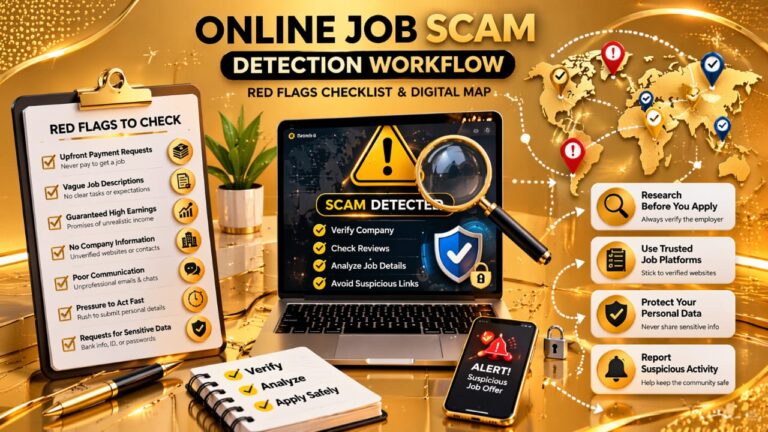
Most platforms are safe, but not all listings are legitimate. This is why using trusted platforms and being cautious with offers is important. Avoid opportunities that ask for payment upfront or promise unrealistic earnings. Staying informed helps you avoid common risks.
What is the biggest mistake beginners make?
The biggest mistake is applying without direction. When your applications are not focused or clearly positioned, employers find it harder to understand your value. Having a clear path, simple proof of your ability, and consistent effort makes a significant difference.
Conclusion
Best websites to find remote jobs for beginners are not just tools—they are systems that reward clarity, consistency, and structured effort. Once you understand how these platforms work and how to position yourself within them, your job search becomes more predictable and less frustrating.
You do not need to be perfect to get started. What matters is choosing the right platform, applying consistently, and improving your approach over time. As you continue, your confidence grows, your skills improve, and opportunities become easier to secure.
Remote work is not about quick success—it is about building momentum. Once that momentum starts, everything becomes clearer, and your chances of long-term success increase significantly.